
Cirsium
- noun
- /ˈsɜrziəm/
- Specialized
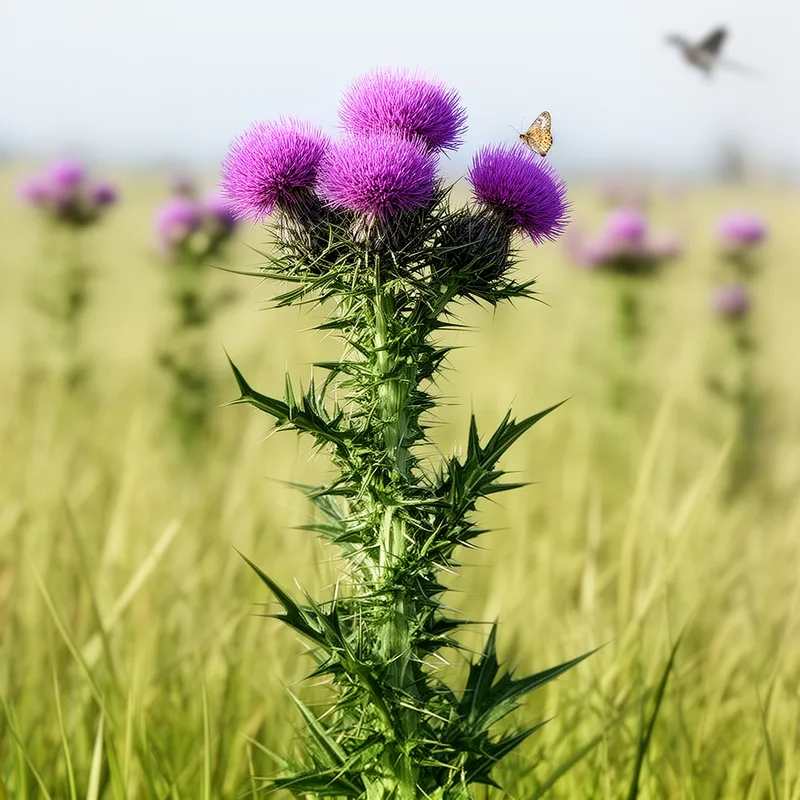
- The field was dotted with Cirsium, their purple flowers standing out against the grass.
Examples
-
Some species of Cirsium provide food for butterflies and birds.
-
Gardeners often remove Cirsium to prevent it from spreading in cultivated beds.
-
The Cirsium plant thrives in dry, sunny areas.
-
Many gardeners appreciate the beauty of Cirsium flowers.
-
Gardeners often remove Cirsium to prevent it from spreading in cultivated beds.
-
Some species of Cirsium provide food for butterflies and birds.
-
The field was dotted with Cirsium, their purple flowers standing out against the grass.
Compounds

- Specialized
A common weed with sharp leaves and purple flowers that spreads by roots

- Specialized
A large prickly plant native to North America with purple-pink flower heads that bees and butterflies visit
- Specialized
A wild plant from northern Europe that lives many years with long leaves and purple flower heads
- Specialized
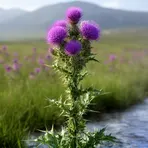
A prickly plant like a thistle with purple flowers that lives for many years in northern Europe

- Specialized
A European thistle with large flower heads and prickly leaves that often grows as a weed

- Specialized
A tall plant with purple-red flower heads that is a type of thistle from central and southwestern Europe

- Specialized
A prickly plant that has large purple flower heads and grows wild as a weed
Surface Forms
Etymology
Cirsium comes from an old Greek word kirsion that meant 'thistle' and is linked to kirsos meaning 'swelling'. A helpful way to remember it is to picture the plant's prickly leaves and round, fluffy seed heads like small 'swellings', which is why botanists used Cirsium for these spiny thistles.

