
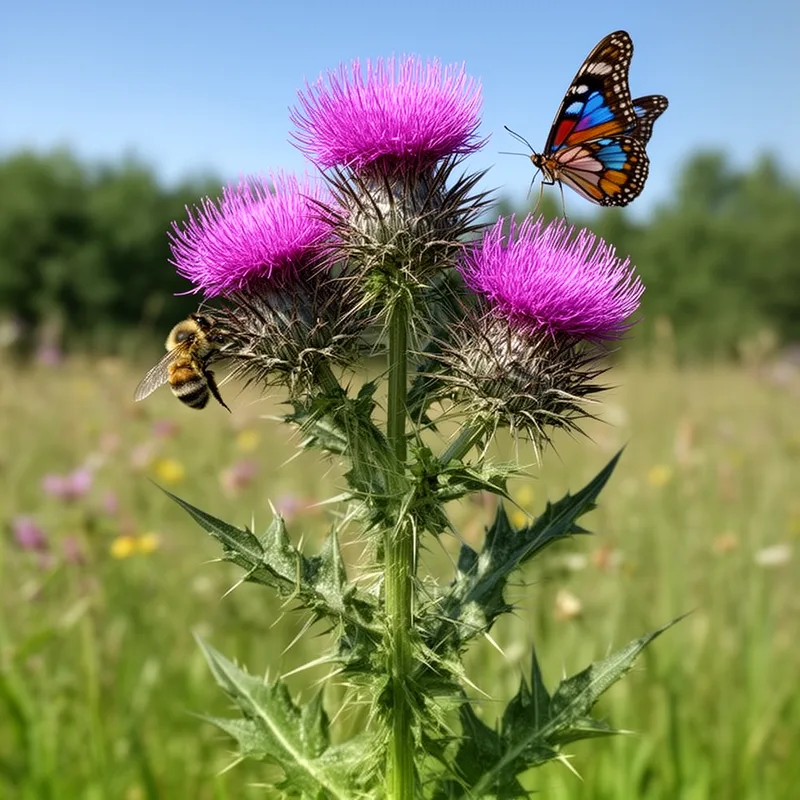
Cirsium discolor
- noun
- Specialized
- The Cirsium discolor attracts butterflies and bees with its vibrant flower heads.
Examples
-
On our hike, we saw several Cirsium discolor growing along the trail near the meadow.
-
The Cirsium discolor is often found in fields and meadows.
-
Gardeners sometimes plant Cirsium discolor to encourage native pollinators in their gardens.
-
Have you seen the Cirsium discolor blooming this season?
-
Gardeners sometimes plant Cirsium discolor to encourage native pollinators in their gardens.
-
On our hike, we saw several Cirsium discolor growing along the trail near the meadow.
-
The Cirsium discolor attracts butterflies and bees with its vibrant flower heads.
Synonyms
A prickly plant with purple-pink flower heads that grows in open fields
Surface Forms
Morphology
This is a Latin binomial (a scientific species name) rather than a normal English compositional phrase; knowing 'Cirsium' = a thistle and 'discolor' = to lose colour might only allow a literal guess like “a discoloured thistle,” which does not reliably yield the specific botanical sense. Proper taxonomic names function as labels and often do not follow ordinary English composition, so a B1 learner who knows the parts would still not be expected to infer the intended species meaning.
Etymology
Cirsium discolor gets its name from the Latin word discolor, which means 'different color' and refers to the pale undersides of its leaves and the bright purple-pink flower heads. So the name gives a clear image to remember this 'field thistle' by its two different colors.

