
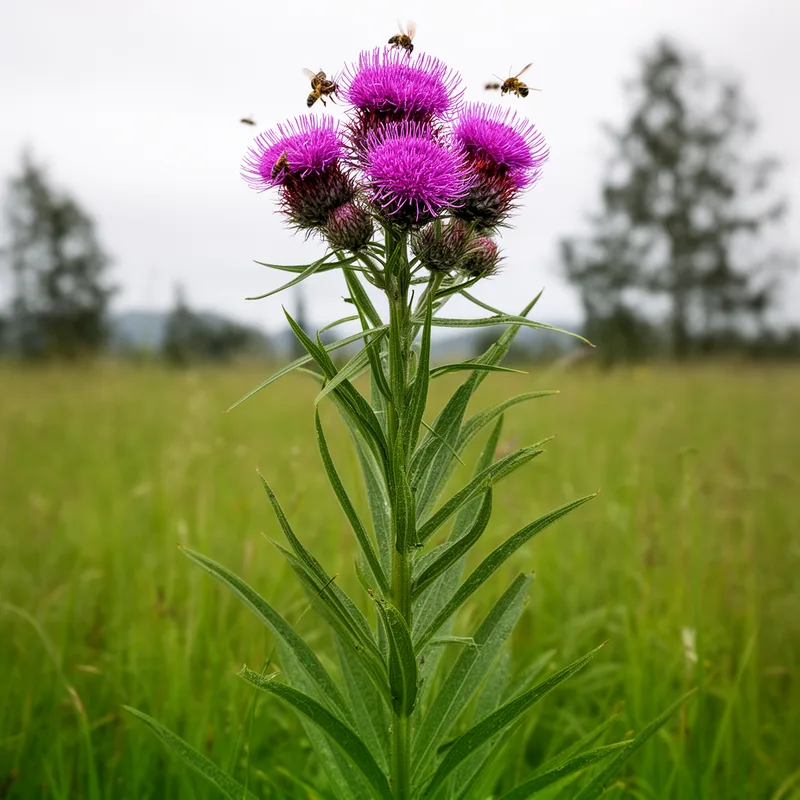
Cirsium helenioides
- noun
- Specialized
- The reddish-purple flowers of Cirsium helenioides attract many pollinators in late summer.
Examples
-
Cirsium helenioides is well-adapted to the cool, damp climates of northern Europe.
-
Botanists studied the distribution of Cirsium helenioides across Scandinavia.
-
The Cirsium helenioides blooms beautifully in the summer.
-
I found a Cirsium helenioides plant in my garden.
-
Botanists studied the distribution of Cirsium helenioides across Scandinavia.
-
The reddish-purple flowers of Cirsium helenioides attract many pollinators in late summer.
-
Cirsium helenioides is well-adapted to the cool, damp climates of northern Europe.
Synonyms
A prickly plant like a thistle with purple flowers that lives for many years in northern Europe

A plant from northern Europe with long pointed leaves and one reddish-purple flower head
Surface Forms
Morphology
Cirsium + helenioides
The genus name Cirsium directly signals 'a type of thistle', so a learner who knows that constituent could infer it refers to a thistle species; however the specific epithet 'helenioides' is a Latin taxonomic form (not a common English word) and its precise sense (e.g. 'resembling Helenium') is not predictable to a B1 learner. Because the phrase is a specialized binomial name that partly signals category but requires extra, non-obvious knowledge for the full meaning, it is only partially transparent.
Etymology
Cirsium helenioides comes from old Greek and Latin words. Cirsium means 'thistle' and helenioides means 'like Helenium', a daisy-like flower, so the name creates a simple picture of a prickly plant with a showy purple, daisy-like head, which matches the plant today.

