

melancholy thistle
- noun
- UK
- The melancholy thistle blooms beautifully in late summer.
Examples
-
The melancholy thistle can often be found blooming in Scottish meadows during summer.
-
Botanists admire the unique reddish-purple flowers of the melancholy thistle.
-
Local folklore attributes special healing properties to the melancholy thistle.
-
In my garden, I planted a melancholy thistle next to the roses.
-
The melancholy thistle can often be found blooming in Scottish meadows during summer.
-
Botanists admire the unique reddish-purple flowers of the melancholy thistle.
-
In my garden, I planted a melancholy thistle next to the roses.
Synonyms

 15
5.6
15
5.6

A wild plant with prickly leaves and purple flowers
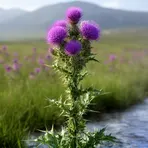
A prickly plant like a thistle with purple flowers that lives for many years in northern Europe
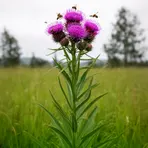
A wild plant from northern Europe that lives many years with long leaves and purple flower heads
Surface Forms
Morphology
This is a straightforward adjective + noun composition: 'melancholy' describes a quality of the 'thistle', so a learner who knows both words can infer a thistle with a somber or subdued appearance. The phrase is descriptive (botanical naming) rather than idiomatic or metaphorically shifted, so its meaning is directly derivable from its parts.
Etymology
Melancholy thistle may come from the plant's droopy, reddish-purple flower that looks 'sad', so people called it melancholy. People also used the thistle in old folk medicine to try to help 'sadness', so the name came to mean this particular plant.