

Castanea pumila
- noun
- Specialized
- The Castanea pumila produces small, tasty nuts.
Examples
-
Several wildlife species rely on the Castanea pumila as a food source.
-
The Castanea pumila thrives in sandy soils throughout the southeastern states.
-
Every fall, we gather the nuts from our Castanea pumila for baking.
-
Many people enjoy harvesting Castanea pumila in the fall.
-
Every fall, we gather the nuts from our Castanea pumila for baking.
-
The Castanea pumila thrives in sandy soils throughout the southeastern states.
-
Several wildlife species rely on the Castanea pumila as a food source.
Synonyms
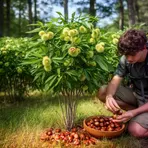
A small chestnut tree that grows like a shrub and makes edible nuts
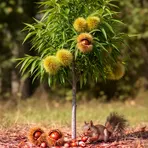
A small chestnut tree from the southeastern United States with small edible nuts
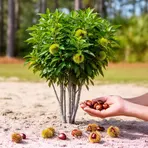
A small bushy tree from the southeastern United States that makes small edible nuts
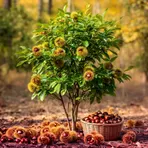
A small tree or shrub in the south of the United States that makes edible nuts
Surface Forms
Morphology
Castanea + pumila
This is a Latin binomial (a scientific name) functioning as a proper noun rather than a compositional English phrase; its intended sense (‘a shrubby chestnut with small nuts’) is not transparently built from everyday English words. One constituent is a taxonomic genus and the other ('pumila') is a non-English/undocumented Latin epithet in the provided data, so a B1 learner who knows the listed constituents would not reliably derive the plant meaning.
Etymology
Castanea pumila comes from Latin words: Castanea means 'chestnut' and pumila means 'small' or 'dwarf'. This gives a simple image of a 'small chestnut' shrub with little edible nuts, so the name fits the plant we know today.

