
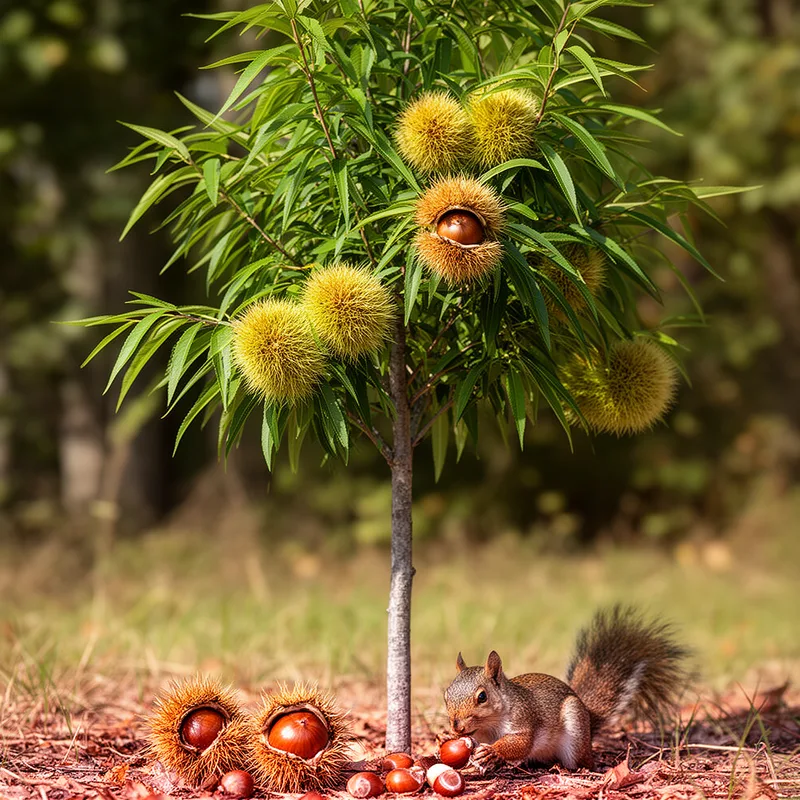
eastern chinquapin
- noun
- US
- The eastern chinquapin is prized for its sweet, edible nuts that wildlife enjoy.
Examples
-
Gardeners in the South often plant the eastern chinquapin for its ornamental value and nut production.
-
You can identify an eastern chinquapin by its narrow leaves and spiky seed pods.
-
The eastern chinquapin produces delicious nuts.
-
Have you ever tried an eastern chinquapin nut?
-
The eastern chinquapin is a popular choice for gardeners because its nuts are both sweet and nutritious.
-
In late summer, the eastern chinquapin trees become laden with small edible nuts that attract various birds and animals.
-
Many people enjoy foraging for the eastern chinquapin nuts during the fall season for use in recipes.
Synonyms

A small chestnut shrub that produces edible nuts in the southeastern United States

A small chestnut tree that grows like a shrub and makes edible nuts
A small bushy tree from the southeastern United States that makes small edible nuts

A small tree or shrub in the south of the United States that makes edible nuts
Surface Forms
Morphology
The phrase is a straightforward adjective + noun compound: 'eastern' specifies geographic location/orientation and 'chinquapin' names the small chestnut-family shrub, so a learner who knows both words can infer it refers to the chinquapin found in the eastern region. There is no idiomatic or metaphorical meaning shift, and the compositional pattern is a common cross-linguistic adjective+noun construction.
Etymology
Eastern chinquapin comes from a Native American word for a 'small chestnut' tree; chinquapin was used for trees that make little, sweet nuts, and eastern means this one grows in the eastern United States. So the name points to a shrubby tree known for its small, edible nuts.

