

Allegheny chinkapin
- noun
- /ˌælɪˈɡeɪni ˈtʃɪŋkəˌpɪn/
- US
- The Allegheny chinkapin produces tasty nuts that are enjoyed by both wildlife and humans.
Examples
-
The small nuts of the Allegheny chinkapin ripen in late summer and are gathered by locals.
-
Hikers stumbled upon a thicket of Allegheny chinkapins growing near the forest edge.
-
The Allegheny chinkapin is often found in wooded areas.
-
Have you ever tasted Allegheny chinkapins before?
-
The Allegheny chinkapin produces tasty nuts that are enjoyed by both wildlife and humans.
-
Hikers stumbled upon a thicket of Allegheny chinkapins growing near the forest edge.
-
The small nuts of the Allegheny chinkapin ripen in late summer and are gathered by locals.
Synonyms

A small chestnut shrub that produces edible nuts in the southeastern United States

A small chestnut tree from the southeastern United States with small edible nuts
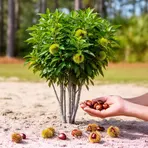
A small bushy tree from the southeastern United States that makes small edible nuts
Surface Forms
Morphology
Allegheny + chinkapin
The noun phrase combines a place-name modifier 'Allegheny' with the noun 'chinkapin' (a type of small chestnut tree), so its meaning — a chinkapin associated with the Allegheny region — is directly derivable from the constituents. This place + noun compounding is a common, compositional pattern across languages, so a learner who knows both words would readily understand the MWE.
Etymology
Allegheny chinkapin comes from the place name Allegheny and the old word chinkapin, which may come from a Native American word for a 'small chestnut'. So, the name gives a simple picture: a small chestnut-like shrub from the Allegheny area that makes edible nuts.

