
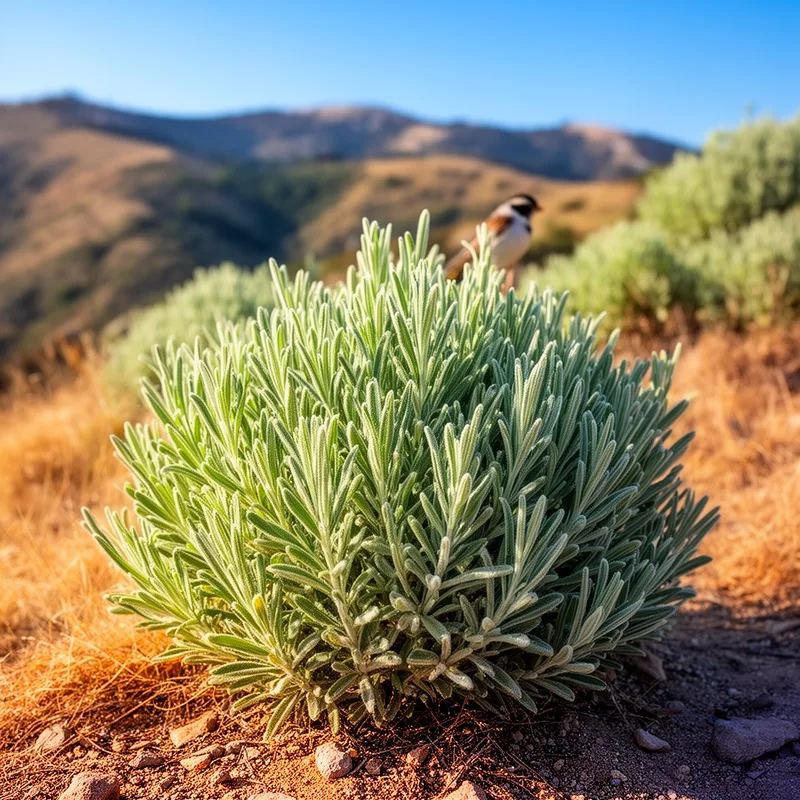
California romero
- noun
- /ˌkælɪˈfɔrnjə roʊˈmɛroʊ/
- US
 :
romero de California
:
romero de California
- Local gardeners often plant California romero for its drought tolerance and aromatic leaves.
Examples
-
The hills were dotted with California romero, filling the air with their distinctive fragrance.
-
The California romero thrives in dry, sunny environments.
-
Wildlife in the region rely on California romero as an important food and shelter source.
-
Many chefs use California romeros for flavoring dishes.
-
Local gardeners often plant California romero for its drought tolerance and aromatic leaves.
-
The hills were dotted with California romero, filling the air with their distinctive fragrance.
-
The California romero thrives in dry, sunny environments.
Synonyms
A fragrant shrub with soft woolly leaves and purple flowers native to southern California and Mexico
A small flowering plant with soft hairy leaves and blue or light purple curled flowers that smell nice

A bush with a strong smell that grows in southern California and Mexico and is used as medicine

A plant from California that lives for many years with woolly stems and large white flowers called pitcher sage

A plant from California with fuzzy stems and leaves and large white flowers
A California plant with woolly stems and large white flowers

A California wild sage with fragrant leaves and bright pink flowers
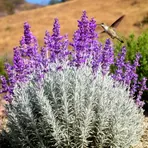
A sage plant from California with silvery leaves and purple flowers
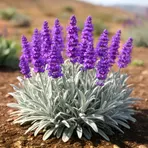
A small plant with silver leaves and groups of purple flowers
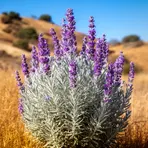
A plant with silvery leaves and purple flowers that grows in California

A plant that lives for many years with soft white leaves and grows in the US Southwest

A low shrub with grey, silvery leaves that grows on dry coastal hills in California
Surface Forms
Morphology
California + romero
The noun phrase is a simple place + noun composition: 'California' specifies provenance and 'romero' is a plant name, so a learner who knows both constituents can readily infer it denotes a romero plant found in California. However, 'romero' is a non‑standard/borrowed plant name (not listed in the supplied dictionary), so learners who do not already know that lexical item may not understand the referent.
Etymology
California romero comes from Spanish-speaking people who called rosemary-like shrubs romero and added 'California' to show it grows in that place. So the name helps you remember it is a fragrant, soft-leaved shrub like 'rosemary' found in that region.

