

Byzantine
 2
8.8
2
8.8

- noun
- /bɪˈzæntiːn/
- The Byzantines were known for their impressive architectural achievements, including the Hagia Sophia.
Loading YouTube…
Watch on YouTubeRecognition by the Franks coming from the West, or restorate, or recognition from the Byzantines coming from the South.
- Recognition by the Franks coming from the West, or restorate, or recognition from the Byzantines coming from the South.
Examples
-
This, however, is where the Byzantines had their first decisive victory.
-
However, the Byzantines still had holdings both in Europe and Asia, and they would remain a player going forward.
-
The location of Christian traditional sites has always been based upon the presence of an early church either from the Byzantine or the Crusader period, and still is to this day.
Academic text (2004) -
After that, the use of organs in the West died out for 200 years, although they survived and flourished in the Eastern, or Byzantine, Empire, whose capital was Constantinople.
Academic text (2005) -
Great empires—Persian and Byzantine—fell before the energetically expanding community of Muslims.
Blog text (26) -
The general austerity and rather iconic quality forcibly recall Byzantium; both Demus and Cahn have rightly described these as "provincial Byzantine."
Academic text (1991) -
During the height of the Byzantine Empire, its influence extended across much of Europe and Asia.
-
Many Byzantine scholars preserved ancient texts, which contributed to the Renaissance in Europe.
Synonyms

A person who lives in or comes from Constantinople, now called Istanbul
Compounds
 1
6.3
1
6.3
The eastern part of the Roman Empire centered on Constantinople that lasted from about 395 to 1453

The Christian church in the Eastern Roman Empire with old worship services and traditions


- Specialized
A form of Greek spoken and written in the Byzantine Empire from about 600 to 1200
- Specialized
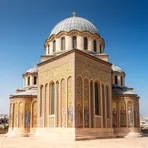
A style of building with large domes on square bases and many mosaics

A very complex, slow system for a government or organization with too much paperwork

Surface Forms
Morphology
Etymology
Byzantine originally meant a person from the city Byzantium, so a Byzantine is simply someone who lived in that city or in the eastern empire.