

Amerindian language
- noun
- /ˌæməˈrɪndɪən ˈlæŋɡwɪdʒ/
- The Hopi and Quechua languages are well-known examples of Amerindian languages.
Examples
-
Efforts are being made to revitalize endangered Amerindian languages in many indigenous communities.
-
Researchers have documented hundreds of Amerindian languages throughout North and South America.
-
The Amerindian language of the Navajo tribe is complex.
-
Many scholars study Amerindian languages for their unique structures.
-
Efforts are being made to revitalize endangered Amerindian languages in many indigenous communities.
-
Researchers have documented hundreds of Amerindian languages throughout North and South America.
-
The Hopi and Quechua languages are well-known examples of Amerindian languages.
Synonyms



 1
6.5
1
6.5
A language spoken by the first people of a place

A language of the native peoples of the Americas

A language spoken by the native people of North, Central, or South America
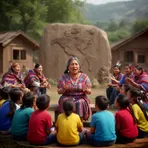
A language spoken by the native people of the Americas

A language first spoken by the native people of the Americas before Europeans arrived

A person from the native peoples of the Americas or a language they speak
Surface Forms
Morphology
The meaning 'languages spoken by the indigenous peoples of the Americas' is directly and compositionally derived from 'Amerindian' (indigenous peoples of the Americas) + 'language' (a named system of speech). This noun–noun construction is a standard, transparent pattern (e.g. 'Spanish language'), so a B1 learner who knows the constituents will readily understand the MWE.
Etymology
Amerindian language comes from the word Amerindian, a blend of American and Indian that early European explorers used for the 'native' peoples they met in the Americas. So, Amerindian language means a language spoken by those original peoples of the Americas.