
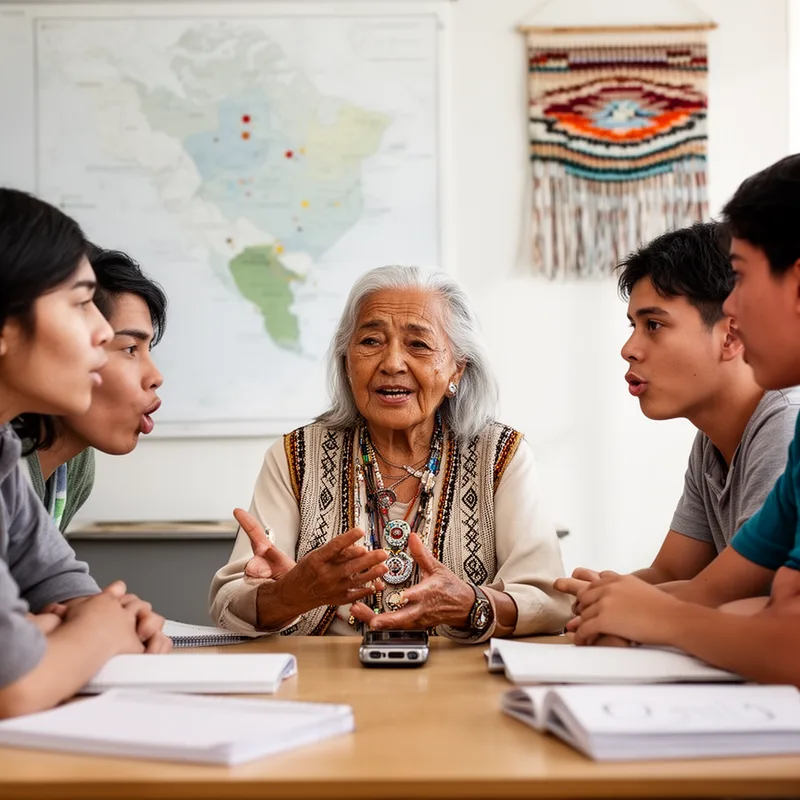
American-Indian language
- noun
- /əˈmɛrɪkən ˈɪndiən ˈlæŋɡwɪdʒ/
- She is fluent in an American-Indian language spoken by her ancestors.
Examples
-
The American-Indian language spoken by the Navajo is complex.
-
Some universities offer courses in at least one American-Indian language.
-
Preserving an American-Indian language is crucial for maintaining cultural heritage.
-
Many children learn an American-Indian language in school.
-
Preserving an American-Indian language is crucial for maintaining cultural heritage.
-
Some universities offer courses in at least one American-Indian language to promote linguistic diversity.
-
Many children learn an American-Indian language in school to connect with their roots.
Synonyms
A language of the native peoples of the Americas

A language spoken by the native peoples of the Americas

A language spoken by the native people of North, Central, or South America
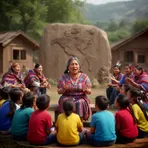
A language spoken by the native people of the Americas
Surface Forms
Morphology
American-Indian + language
The meaning is a straightforward adjectival + noun composition: 'American-Indian' describes the group and 'language' names the speech system, so the phrase denotes a language of American Indian (indigenous American) peoples. This standard 'X language' pattern is cross‑linguistically common, so a B1 learner who knows the constituents would readily infer the intended meaning (though the exact label is somewhat dated).
Etymology
American-Indian language names the languages spoken by the native peoples of the Americas. It simply joins American-Indian, meaning the native people, and language, so it refers to the languages those communities used before Europeans arrived.

