

American germander
- noun
- /əˈmɛrɪkən ˈdʒɜːrməndər/
- US
- The botanist identified the plant by its serrate leaves as American germander.
Examples
-
In the wildflower garden, the American germander bloomed abundantly throughout the summer.
-
Bees are often attracted to the pale purple flowers of the American germander.
-
The American germander blooms beautifully in the summer.
-
Many gardeners love the American germander for its unique flowers.
-
Bees are often attracted to the pale purple flowers of the American germander.
-
In the wildflower garden, the American germander bloomed abundantly throughout the summer.
-
Many gardeners love the American germander for its unique flowers.
Synonyms
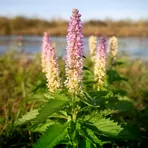
A plant that lives many years with toothed leaves and spikes of pink or cream flowers

A low woody plant with serrated leaves and cream to pink or purple flowers in spikes native to North America
Surface Forms
Morphology
The phrase is a straightforward adjective+noun composition: 'American' specifies the origin or variety of the noun 'germander' (a type of plant). This literal, taxonomic naming pattern is cross-linguistically common and directly predictable from the constituents, so a B1 learner who knows both words will grasp the meaning.
Etymology
American germander comes from the old garden name germander, a word for small herb shrubs once used in folk medicine, while American simply shows this is the type that grows in North America. So the name means a germander 'from North America', which fits this small, flowering shrub.

