
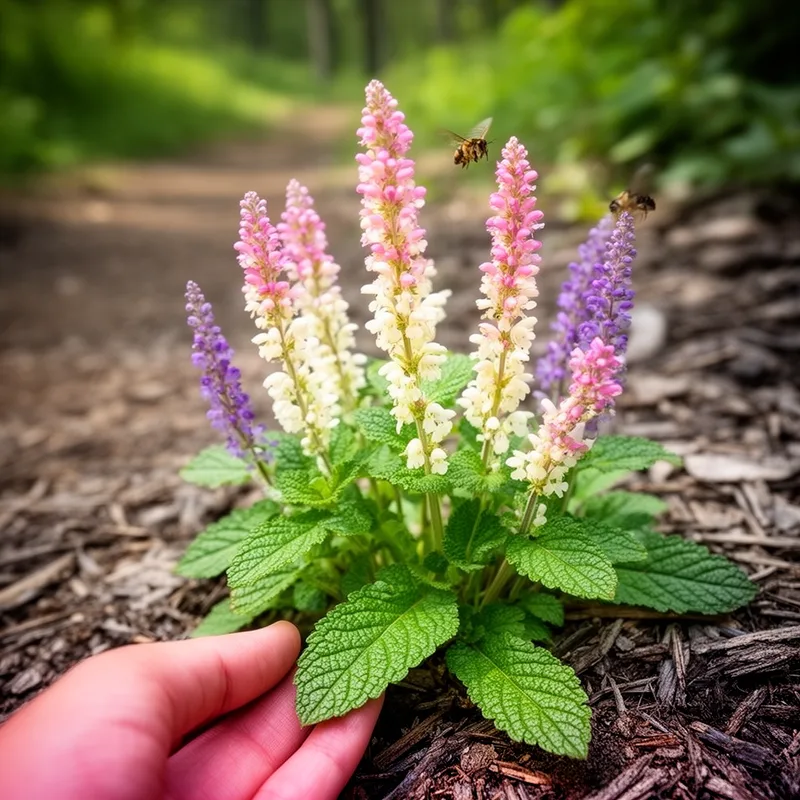
wood sage
- noun
- /wʊd seɪdʒ/
- US
- You can recognize wood sage by its serrated leaves and tall flower spikes found in North American woodlands.
Examples
-
The wood sage in the garden attracted many pollinators during the summer.
-
Hikers often spot wood sage along forest trails in the northeastern United States.
-
She pressed the leaves of wood sage to make a fragrant herbal tea.
-
The wood sage blooms beautifully in the summer.
-
Many gardeners love planting wood sages in their flower beds.
-
The wood sage thrives in rocky soil, showcasing its delicate cream and pink flowers in late summer.
-
Many butterflies are drawn to the wood sage, especially when it is in full bloom.
Synonyms
A plant that lives many years with toothed leaves and spikes of pink or cream flowers

A small bushy plant from North America with toothed leaves and pale purple flowers in spikes
Surface Forms
Morphology
The noun–noun combination 'wood' (wooded area) + 'sage' (the herb) yields a straightforward meaning of a sage associated with woods, so a learner who knows both constituents can infer it refers to a plant that grows in or near woods. This fits the regular English modifier + head noun pattern and is cross-linguistically common, making the basic meaning predictable to a B1 learner. Specific taxonomic details (species name, flower colour) are extra factual information but do not reduce the compound's compositional transparency.
Etymology
Wood sage gets its name from the two words wood and sage. The plant often smells or looks like the garden sage but grows in the wood, so the name means 'sage of the woods' and is used for this forest herb.

