
Teucrium canadense
- noun
- /ˈtjuːkriəm kəˈnædəˌziːn/
- Specialized
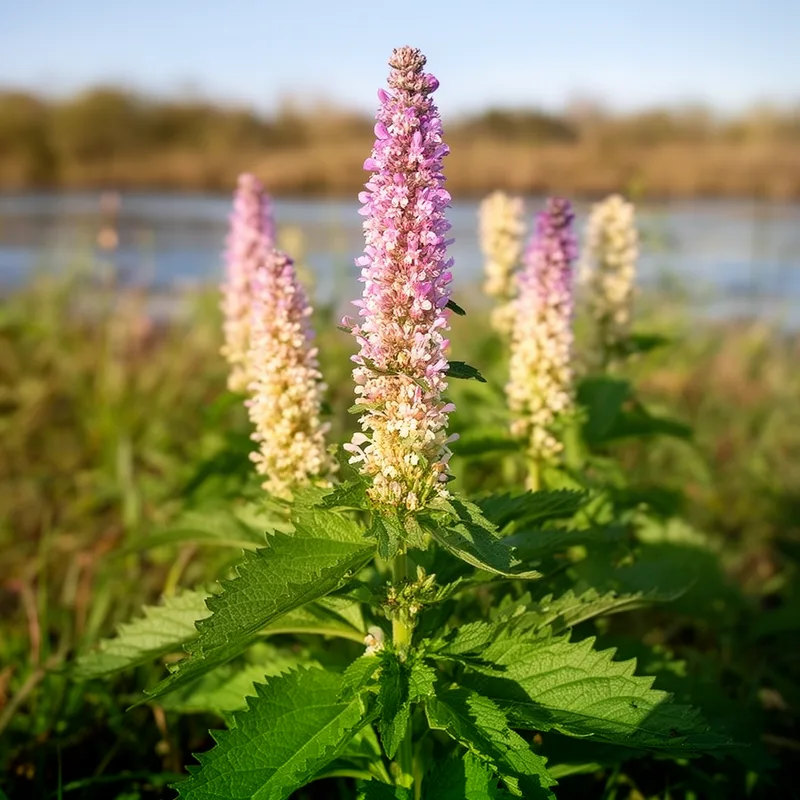
- Gardeners appreciate Teucrium canadense for its attractive spikes of pinkish-purple flowers.
Examples
-
Teucrium canadense can be found growing along riverbanks and in moist meadows throughout much of North America.
-
In spring, Teucrium canadense produces beautiful purple flowers.
-
Botanists studied the medicinal properties of Teucrium canadense in traditional remedies.
-
The Teucrium canadense thrives in moist, well-drained soils.
-
Teucrium canadense can be found growing along riverbanks and in moist meadows throughout much of North America.
-
Gardeners appreciate Teucrium canadense for its attractive spikes of pinkish-purple flowers.
-
In spring, Teucrium canadense produces beautiful purple flowers.
Synonyms

A small bushy plant from North America with toothed leaves and pale purple flowers in spikes

A low woody plant with serrated leaves and cream to pink or purple flowers in spikes native to North America
Surface Forms
Morphology
Teucrium + canadense
This is a Latin binomial (genus + specific epithet) used as a scientific plant name; the parts are not common English words and the specific epithet here is not a normal lexical item a B1 learner would know. Determining the full sense ('a perennial subshrub native to North America') requires botanical and taxonomic knowledge rather than straightforward composition, so the meaning is not derivable from the constituents by an average B1 learner.
Etymology
Teucrium canadense combines an old plant name Teucrium and the word canadense, which means 'from Canada'. So the name helps you remember that this germander comes from Canada and nearby parts of North America.

