
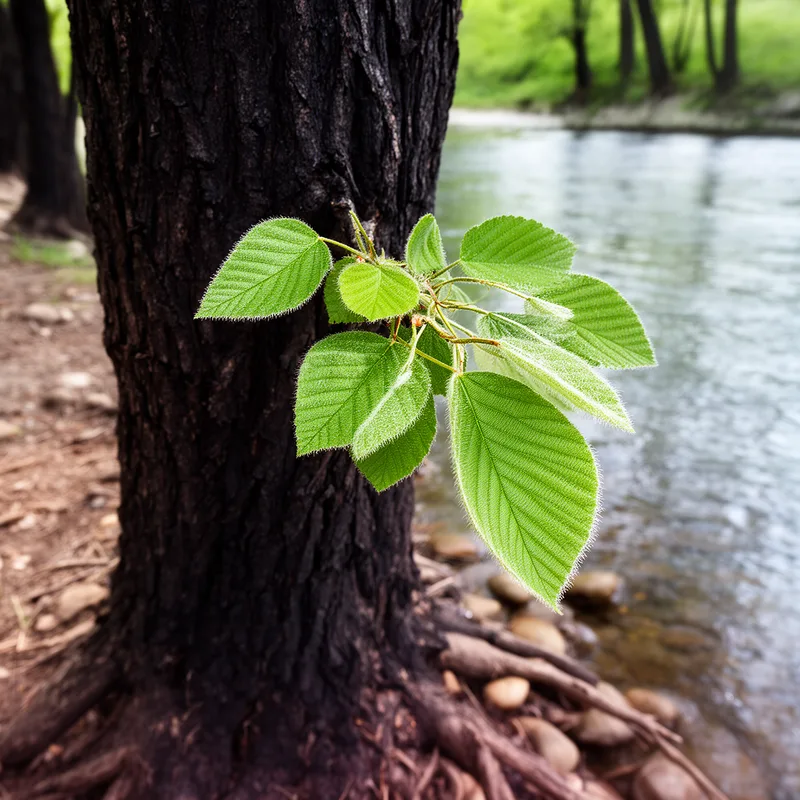
Alnus vulgaris
- noun
- UK
- In wetland restoration projects, Alnus vulgaris is often planted to improve soil quality.
Examples
-
The banks of the river are lined with Alnus vulgaris, providing shade for fish.
-
Botanists studied the leaf structure of Alnus vulgaris in different climates.
-
The Alnus vulgaris tree is commonly found near rivers.
-
In Europe, Alnus vulgaris is often used for timber.
-
In wetland restoration projects, Alnus vulgaris is often planted to improve soil quality.
-
Botanists studied the leaf structure of Alnus vulgaris in different climates.
-
The banks of the river are lined with Alnus vulgaris, providing shade for fish.
Synonyms
A medium-sized tree that grows near rivers with small woody cones and leaves hairy underneath

A medium-sized tree from Europe that grows near rivers and wetlands with dark bark and rounded leaves

A medium-sized tree with dark bark and rounded leaves that grows near rivers and wetlands in Europe and western Asia
Surface Forms
Morphology
This is a Latin binomial combining the genus name 'Alnus' (alder) with the epithet 'vulgaris' (meaning 'common' or 'widespread'), so the sense 'common alder' is directly derivable from the parts. The genus+epithet pattern is regular and cross-linguistically recognizable, so a B1 learner who knows the constituent meanings can infer it denotes a species of alder.
Etymology
Alnus vulgaris comes from Latin words: Alnus is the Latin word for the 'alder' tree and vulgaris means 'common'. So the name simply calls this tree the 'common alder', a familiar riverbank tree often seen in many parts of Europe.

