
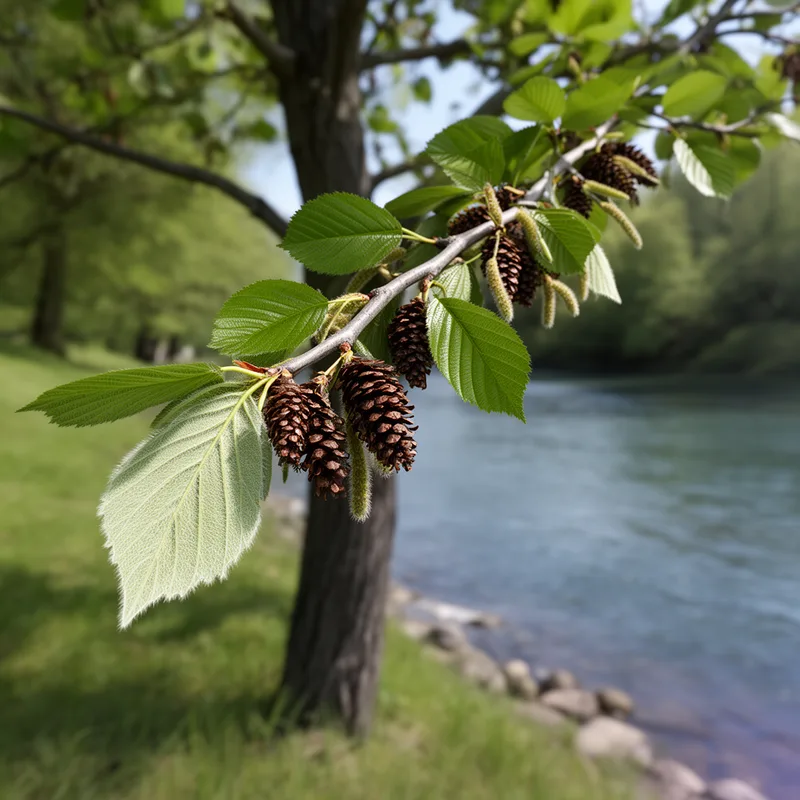
common alder
- noun
- /ˈkɑːmən ˈɔːldər/
- UK
- We identified the tree as a common alder by examining the hairy undersides of its leaves.
Examples
-
The common alder is often planted along riverbanks to prevent soil erosion.
-
In spring, the common alder produces small, woody catkins that hang from its branches.
-
The common alder grows near rivers.
-
Many common alders line the pathway.
-
The common alder is often planted along riverbanks to prevent soil erosion.
-
In spring, the common alder produces small, woody catkins that hang from its branches.
-
We identified the tree as a common alder by examining the hairy undersides of its leaves.
Synonyms

 4
5.5
4
5.5

A tree with toothed leaves that often grows near rivers and wet ground

A tree with dark bark and leaves that are hairy underneath that grows near rivers

A medium-sized tree with dark bark and rounded leaves that grows near rivers and wetlands in Europe and western Asia

A medium-sized tree from Europe that grows near rivers and wetlands with dark bark and rounded leaves

A tree with toothed leaves that often grows by rivers and has wood that resists rot
How Woody

Surface Forms
Morphology
The meaning ('a commonly occurring alder tree') is directly and compositionally derived from 'common' (typical/frequent) plus 'alder' (a specific tree species); the adjective+noun combination follows a regular, literal pattern. There is no idiomatic or metaphorical shift and the referent is predictable, so a B1 learner who knows both constituents will understand it.
Etymology
Common alder comes from two simple words: alder is the old name for this tree and common means 'widespread' or ordinary. Picture many alder trees standing along riverbanks and wet ground, and you can see why the name refers to this ordinary riverside tree.