

Alnus glutinosa
- noun
- Specialized
- The Alnus glutinosa is commonly found along riverbanks and wetlands in Europe.
Examples
-
Botanists studied the Alnus glutinosa for its ability to improve soil fertility.
-
We planted an Alnus glutinosa in our garden to attract more wildlife.
-
The Alnus glutinosa is often found near rivers.
-
I planted an Alnus glutinosa in my backyard.
-
The Alnus glutinosa tree thrives in wetland areas throughout Europe.
-
You can often see the Alnus glutinosa near ponds and marshes, thanks to its preference for moist soil.
-
Local wildlife often nests in the branches of the Alnus glutinosa due to its abundant foliage.
Synonyms

A medium-sized tree from Europe that grows near rivers and wetlands with dark bark and rounded leaves
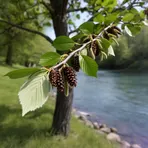
A medium-sized tree that grows near rivers with small woody cones and leaves hairy underneath

A tree with dark bark and leaves that are hairy underneath that grows near rivers
Surface Forms
Morphology
Alnus + glutinosa
This is a Latin binomial (genus + specific epithet). A learner who knows 'Alnus' as a group of alder trees can infer that the phrase names a species of that genus, but the epithet 'glutinosa' is not an English word and does not transparently convey the species' wetland habit or other features to a B1 learner. Thus the composition gives a partial clue (it's an Alnus species) but not the full, ordinary-language meaning.
Etymology
Alnus glutinosa comes from Latin: Alnus means 'alder' and glutinosa means 'sticky', because the tree has sticky buds and young shoots. So the name is like calling it the 'sticky alder', which fits this wetland tree often found near rivers.

