
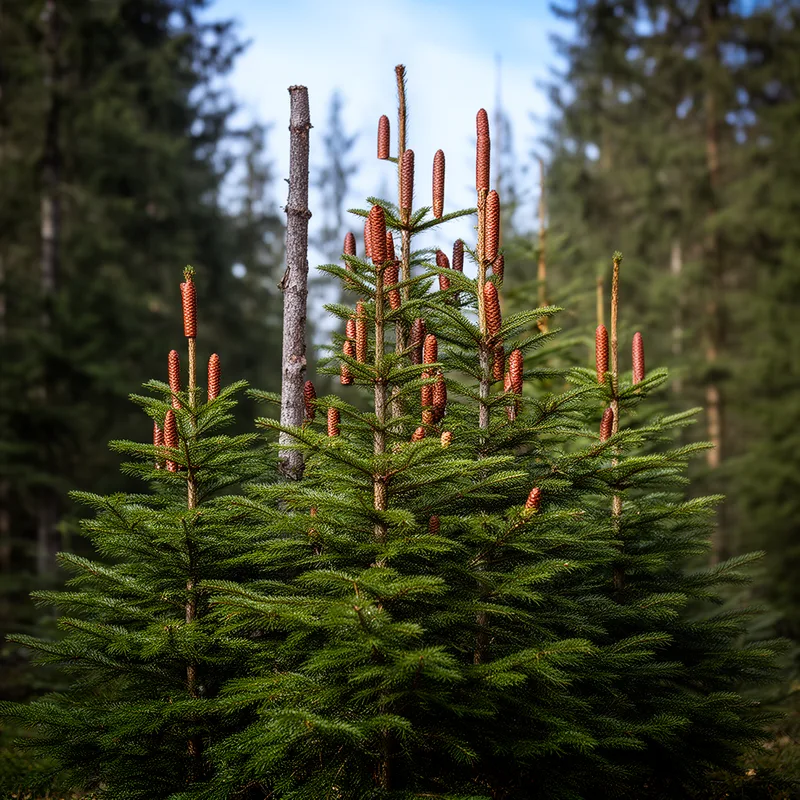
Abies
- noun
- /ˈeɪbiːs/
- Specialized
- The forest contained several majestic Abies species, contributing to the rich diversity of evergreens.
Examples
-
Many Christmas trees are cultivated from Abies, particularly the noble and balsam firs.
-
Many species of Abies thrive in mountainous regions.
-
Researchers studied the growth patterns of Abies in different climate zones.
-
The Abies tree is known for its distinctive shape.
-
Many Christmas trees are cultivated from Abies, particularly the noble and balsam firs.
-
Researchers studied the growth patterns of Abies in different climate zones.
-
The forest contained several majestic Abies species, contributing to the rich diversity of evergreens.
Synonyms

 22
1.6
22
1.6

A tall evergreen tree with needle leaves and upright cones often used as a Christmas tree
 5
2.0
5
2.0
A tall evergreen tree with soft needles often used for holiday decoration

A tall evergreen tree with needle leaves and upright cones often used as a Christmas tree

A group of evergreen trees like firs that grow in cool northern regions
Compounds

- Specialized
A medium-sized fir tree from northeastern North America with fragrant needles often used as a Christmas tree

- Specialized
A tall evergreen fir tree from central and southern Europe often used for wood

- Specialized
A medium to tall fir tree from western North America with leaves that smell like an orange when crushed

- Specialized
A tall fir tree from the Pacific Northwest with long curved branches and deep green leaves

- Specialized
A medium to tall evergreen tree that grows high in the Rocky Mountains

- Specialized
A cone-shaped fir tree from southwestern California with sharp leaves and spiny cones
- Specialized
A tall evergreen tree with a pyramid shape, dark green needles and long hanging cones
Surface Forms
Etymology
The word Abies comes from the Latin word abies, which meant 'fir', the tree often used as a 'Christmas tree'. That's why Abies is the scientific name for the true fir trees with needle-like leaves and upright cones.