

witch grass
- noun
- /wɪtʃ ɡræs/
- UK
- Invasive witch grass can quickly choke out more desirable crops if left unchecked.
Examples
-
The farmer struggled to control witch grass spreading across his cornfields.
-
Many gardeners mistake witch grass for an ornamental plant because of its delicate panicles.
-
The garden was overrun by witch grass.
-
Many farmers struggle with witch grasses in their fields.
-
Invasive witch grass can quickly choke out more desirable crops if left unchecked.
-
The farmer struggled to control witch grass spreading across his cornfields.
-
Many gardeners mistake witch grass for an ornamental plant because of its delicate panicles.
Synonyms

 1
7.5
1
7.5

A European grass with long underground roots that spreads quickly and becomes a common weed


 1
9.9
1
9.9
A fast-growing grass from Europe and Asia that often becomes a weed and replaces native plants
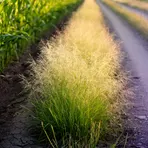
A wild grass that grows in fields and along roads and spreads quickly

A common weed with long stems under the ground that spreads quickly through lawns

A fast-spreading European grass with long underground stems that is a common weed in gardens and fields

A grass from Europe that spreads quickly by stems under the ground and is a weed in North America

A fast-spreading grass with creeping roots that grows as a weed

A rough grass that grows as a common yard weed with thin flower spikes

A North American grass with thin, brushy flower clusters that often grows as a weed in fields
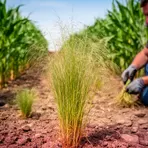
A North American grass with thin, brush-like flower heads that often grows as a weed

A wild grass with thin brush-like seed heads that grows in fields

A tall grass that spreads by creeping roots and feeds animals but can be a farm pest

A tall grass that spreads quickly and often grows as a harmful weed sometimes used for animal feed

A European grass that grows as a weed and has sharp seeds that can injure farm animals that eat it
Surface Forms
Morphology
witch + grass
The compound clearly signals a type of grass (grass modified by 'witch'), so a B1 learner who knows 'witch' and 'grass' will infer it refers to a particular kind of grass. However, the specific sense — that it is a weedy, fast-spreading, unwanted species — is conventional and not fully predictable from the constituents, so full meaning requires lexical knowledge.
Etymology
Witch grass may come from old stories that blamed witches when a wild grass suddenly took over a garden. That's why the name now means a weedy plant that 'spreads quickly' and is 'hard to remove'.