
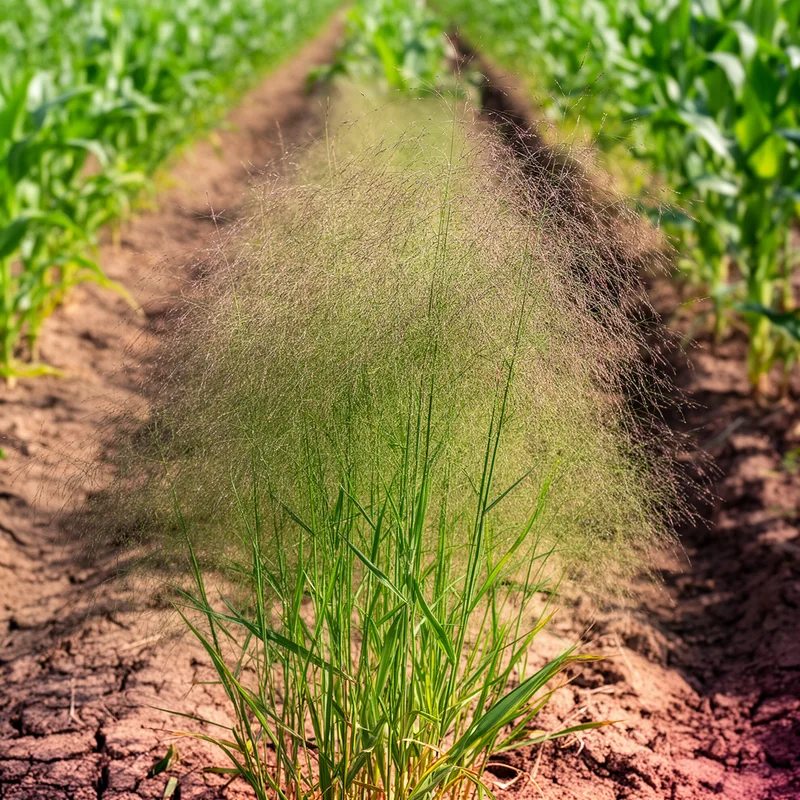
Panicum capillare
- noun
- /ˈpænɪkəm kəˈpɪlɛr/
- Specialized
- The slender panicles of Panicum capillare give it a distinctive, brushy appearance.
Examples
-
In many cornfields across the Midwest, Panicum capillare can be a troublesome weed.
-
Farmers often remove Panicum capillare to protect their crops from competition.
-
Look at the Panicum capillare growing near the fence!
-
The Panicum capillare has slender flower clusters.
-
Farmers often remove Panicum capillare to protect their crops from competition.
-
In many cornfields across the Midwest, Panicum capillare can be a troublesome weed.
-
The slender panicles of Panicum capillare give it a distinctive, brushy appearance.
Synonyms

A wild grass with thin brush-like seed heads that grows in fields

A common North American grass with thin, brush-like groups of flowers that grows as a weed in fields
A North American grass with thin, brush-like flower heads that often grows as a weed
Surface Forms
Morphology
Panicum + capillare
This is a Latin binomial: a learner who knows 'Panicum' (a genus of grasses) can reasonably infer the phrase refers to a type of grass, but the species epithet 'capillare' is a Latin form not found in the provided dictionary and its specific sense ('hair-like') is not predictable to a B1 learner. Taxonomic names follow scientific convention rather than everyday compositional rules, so the general category is transparent but the precise species meaning is not.
Etymology
Panicum capillare may come from old words: panicum meaning 'small flower cluster' and capillare meaning 'hair-like'. The grass has very thin, brushy flower heads that look like hair, so the name helps you remember this weedy, brushy plant.

