

tumble grass
- noun
- US
- The farmer spent hours pulling tumble grass from his wheat field.
Examples
-
Researchers studied how tumble grass affects soil quality in agricultural areas.
-
In dry seasons, tumble grass can quickly take over abandoned lots.
-
I found some tumble grass in my garden.
-
The tumble grass swayed gently in the breeze.
-
In dry seasons, tumble grass can quickly take over abandoned lots.
-
The farmer spent hours pulling tumble grass from his wheat field.
-
Researchers studied how tumble grass affects soil quality in agricultural areas.
Synonyms

A common North American grass with thin, brush-like groups of flowers that grows as a weed in fields
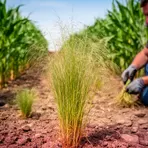
A North American grass with thin, brush-like flower heads that often grows as a weed

A North American grass with thin, brushy flower clusters that often grows as a weed in fields
Surface Forms
Morphology
The noun is compositionally built from 'tumble' (to fall or roll) + 'grass' (a plant), so the meaning as a type of grass that tumbles or is easily rolled/moved by wind is directly inferable. This follows normal English compounding and parallels like 'tumbleweed', so a B1 learner who knows both constituents can reasonably understand it.
Etymology
The plant called tumble grass is named for what it does: when dry, the whole grass breaks off and tumbles across fields in the wind, carrying seeds as it goes. That's why the name refers to a grass that 'tumbles' and often acts like a 'weed' in farms and open lots.

