
weak


 1
7.7
1
7.7
- adjective
- /wiːk/
- Specialized
- Instead, we recommend that only unstressed, non-final syllables should be considered valid opportunities for evaluating weak syllable deletion (e.g., elephant, computer).
- weak syllable
- a weak vowel
- weak syllable deletion
Examples
-
One strong beat, one weak beat, strong, weak, strong, weak in that fashion.
-
Four tests provided sufficient opportunities for assessing weak syllable deletion (BBTOP, CAAP-2, DEAP, KLPA-2).
Academic text (2014) -
I just want to write this weak form in a much simpler form.
-
It's B major, but all the chord tones are on weak beats.
-
All target nouns will be produced with similar movement amplitude and duration across weak and strong syllables.
Academic text (2011) -
Syncopation is an interesting way of shifting accents of words and syllables from strong to weak beats.
Academic text (2004) -
In particular, the less competent talkers were more likely to delete weak syllables, omit consonants and vowels, reduce diphthongs, and make consonant harmony errors.
Academic text (2012) -
In the phrase 'the cake is done,' the article 'the' is often pronounced in a weak manner.
-
When singing, some notes fall on weak beats, giving the music a gentle feel.
-
In English phonetics, weak syllables are less emphasized compared to strong ones.
Synonyms
 1
8.2
1
8.2
A vowel or syllable said with little stress

A part of a word not said with strong emphasis, like the second syllable of banana

Parts of words that you say without strong stress

Not having stress in a syllable of a word

A part of a word people do not pronounce with stress and say more softly than other parts
Antonyms
Idioms

Compounds



- Specialized
2
8.3
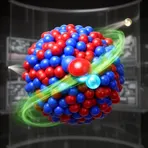
A basic interaction in nature that causes some radioactive decay and acts on particles like neutrinos




- Specialized
1
8.1
A basic force that makes some tiny particles change and causes some radioactive decay


- Specialized
A scientific idea that explains the weak force that makes some atoms change into other atoms



How Stressed

- Specialized
1
7.7
Surface Forms
Etymology
Weak comes from the old English word wāc, meaning 'pliant' or 'easily bent', and is like other old German words for 'not strong'. So, a weak vowel or syllable is one said with little force or stress.