

viviparous
- adjective
- /vɪˈvɪpərəs/
- Specialized
- Overall, long-distance dispersal in seagrasses appears far more likely to occur through seeds, fruits, viviparous seedlings, and vegetative fragments than by pollen.
- viviparous lizard
- viviparous species
- viviparous female
Examples
-
The best models would be a single species or two closely related species in which some populations are viviparous and some are oviparous.
Academic text (1993) -
Even the Antarctic sponges tend either to be viviparous or to have some other form of brood protection.
Academic text (1992) -
Animals having a placenta that have been called ovoviviparous should be considered to be viviparous.
Academic text (1993) -
Many early studies of squamate viviparity examined various features of viviparous species.
Academic text (1993) -
For example, viviparous females should exhibit fewer shell glands than related oviparous females.
Academic text (1993) -
The occurrence of the few viviparous lizards in the tropics, however, stimulates an important question.
Academic text (1993) -
Few viviparous species are found in the tropics (Tinkle and Gibbons 1977).
Academic text (1993) -
For example, marine reptiles (e.g., sea snakes) could benefit from a viviparous mode of reproduction because they would not need to leave the ocean to nest.
Academic text (1993) -
Interestingly, a remnant of the eggshell is still present in many viviparous species, such as the kangaroos (Tyndale-Biscoe and Renfree 1987).
Academic text (1993) -
The red mangrove tree is unique because it is viviparous and produces young plants instead of seeds.
Synonyms

Giving birth to live young instead of laying eggs
Antonyms

Compounds
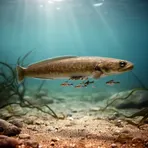
How Live-Bearing

Surface Forms
Morphology
viviparous = parous (opaque) = vivi + par + ous
The word is built from classical elements meaning 'live' and 'bearing', but this relationship is not transparent to an average English learner.
Etymology
The word viviparous comes from Latin parts vivi- meaning 'alive' and -parous meaning 'giving birth', like in parent. So a viviparous animal 'gives birth to live young' rather than laying eggs.

