
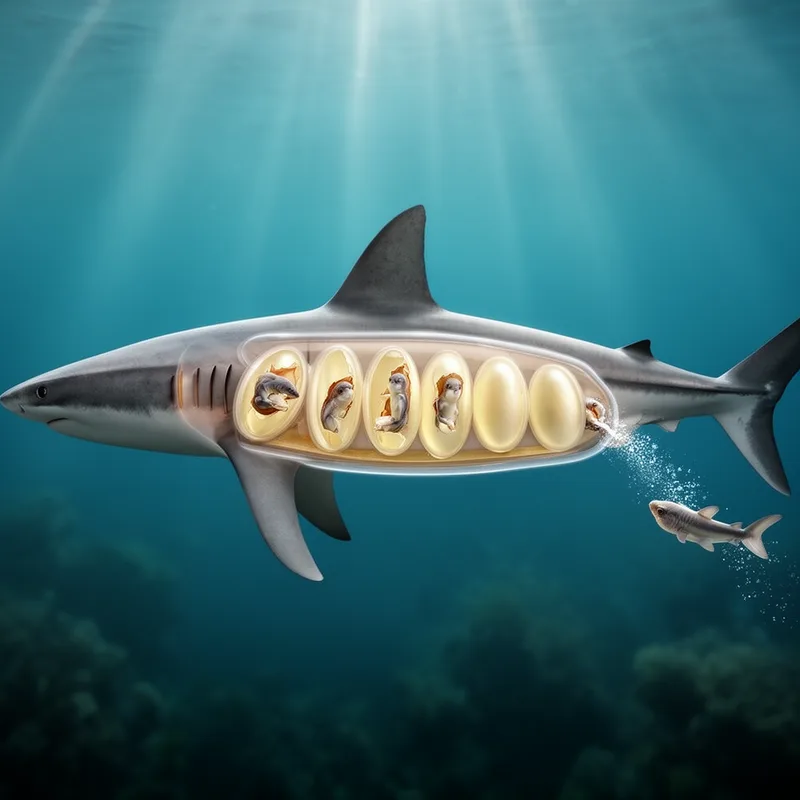
ovoviviparous
- adjective
- /ˌoʊvoʊˈvaɪvɪpərəs/
- Specialized
- The female lizard is ovoviviparous, allowing her eggs to hatch inside her before she gives birth to her young.
Examples
-
The shark is known for being ovoviviparous, giving birth to live young after they have developed inside eggs in its body.
-
Animals having a placenta that have been called ovoviviparous should be considered to be viviparous.
Academic text (1993) -
Neither has a larva with a yolk sac, and there is no evidence that would indicate C. acrolepis is viviparous or ovoviviparous.
Academic text (1990) -
Some species of snakes are ovoviviparous, which means they keep their eggs inside until the young are ready to hatch.
Synonyms

To give birth to live young that grow inside the mother's body

Giving birth to live young instead of laying eggs
How Live-Bearing

Surface Forms
Morphology
ovoviviparous = viviparous (semi-transparent) = ovo + viviparous
Formation is regular (ovo- + viviparous) and its meaning is deducible for those familiar with biological combining forms, but the elements are technical and not fully transparent to an average B1 learner.
Etymology
Ovoviviparous breaks into parts: ovo- meaning 'egg', vivi- meaning 'alive', the same root as in survive, and -parous meaning 'bearing' or 'giving birth'. So an ovoviviparous animal keeps its eggs inside until they hatch and the young are born live.

