

oviparous
- adjective
- /ˌoʊvɪˈpɛrəs/
- Specialized
- Turtles are known for being oviparous, laying their eggs on sandy beaches.
- oviparous species
- oviparous lizards
Examples
-
Unfortunately, good comparative data for closely related oviparous and viviparous species do not exist to test these possibilities.
Academic text (1993) -
In contrast, all of the approximately 250 species of turtles, 21 species of crocodilians, and 2 species of tuatara are oviparous, producing only shelled eggs (Blackburn 1982, 1985; Shine 1985).
Academic text (1993) -
Most oviparous lizards and snakes retain their eggs for two to three weeks.
Academic text (1993) -
Rockfish fecundity apparently is lower than some comparable oviparous fishes, but the difference is not dramatic.
Academic text (1991) -
Surgical removal of the corpora lutea causes premature oviposition in all oviparous lizard species examined.
Academic text (1993) -
The biologist explained that oviparous animals have a unique reproductive strategy compared to mammals.
-
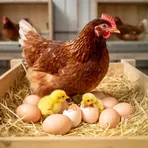
Many bird species are oviparous, producing eggs that hatch into chicks after a few weeks.
Synonyms


 1
4.1
1
4.1
Can lay eggs that become young animals
Antonyms

How Live-Bearing

Surface Forms
Morphology
Etymology
Oviparous comes from two parts: ovi- meaning 'egg', the same root in ovum and ovary, and -parous meaning 'to give birth' or 'to bear', like in 'parent'. So oviparous animals 'give birth' from eggs, meaning they lay eggs that hatch outside the body.