
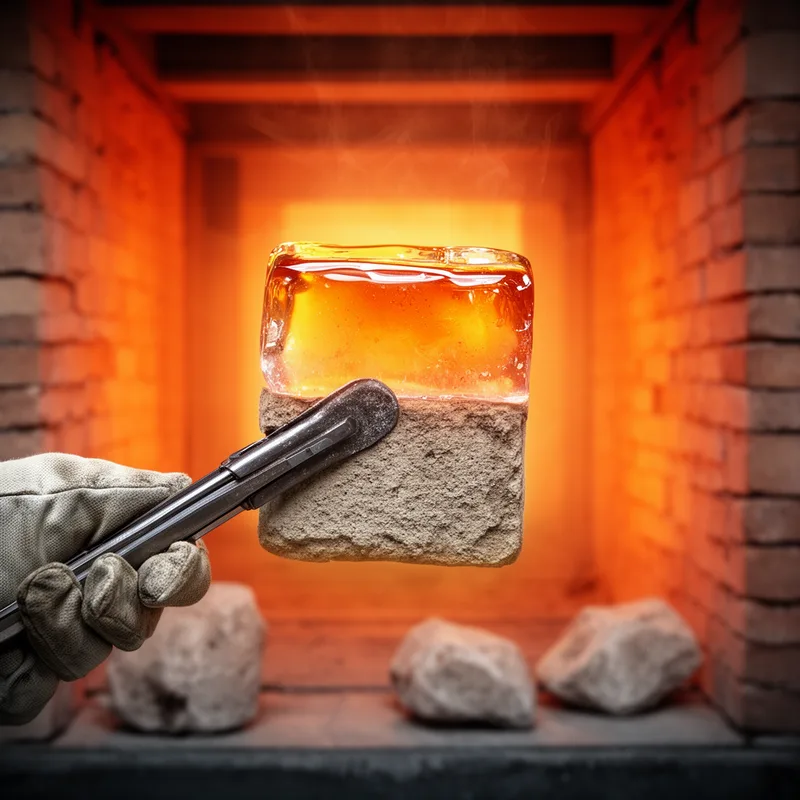
vitrification
- noun
- /ˌvɪtrɪfɪˈkeɪʃən/
- Specialized
- Technologies promoted by the technology office include waste stabilization methods, such as vitrification, and novel soil remediation techniques, such as vapor extraction.
- process known as vitrification
Loading YouTube…
Watch on YouTubeAnd they found very high levels of radiation and they found vitrification of stone.
- And they found very high levels of radiation and they found vitrification of stone.
Examples
-
Vitrification, or binding these wastes in impenetrable, insoluble glass, is already being used in France, which depends on nuclear power for most of its electricity.
Academic text (1990) -
Engineers at Europlasma in Bordeaux began operating the first industrial-scale vitrification furnace to process fly ash derived from household waste incineration at the end of last year.
Academic text (2000) -
And they found very high levels of radiation and they found vitrification of stone.
-
It all depends on whether vitrification works.
Blog text (26) -
Overworking the glass can cause de vitrification because you burn all of the sodium out.
-
I'm intrigued by vitrification, glass mirror windows almost each one of you have.
-
The plan is to convert hazardous waste into a safe form using vitrification, turning it into a glass-like material.
-
At the nuclear facility, vitrification is employed to transform high-level radioactive waste into stable glass.
-
Scientists are studying the vitrification process to improve the safety of storing toxic materials.
How Hard
- Specialized

 1
4.6
1
4.6

- Specialized
1
5.4
- Specialized
1
6.8
Surface Forms
Morphology
vitrification = vitrify (semi-transparent) = vitr + ify + ation
The noun is a regular nominalization of vitrify, but the technical base and spelling change make it only partly transparent.
Etymology
Vitrification comes from the Latin word vitrum 'glass' and the ending -fication 'making', so it literally means 'making into glass'. That's why we use it for the process where heat turns materials into a shiny, glass-like substance.