
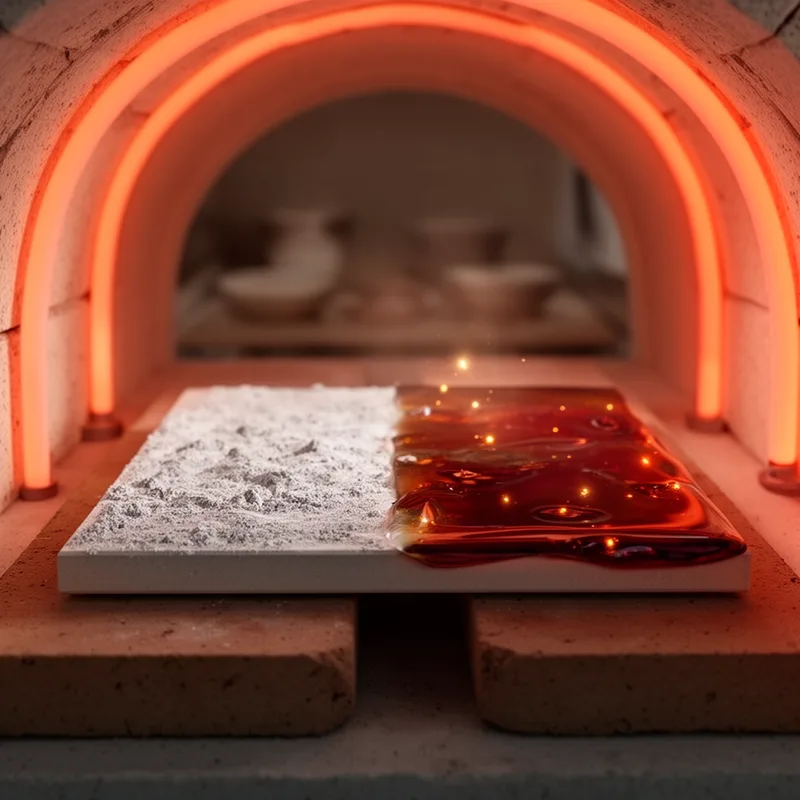
to vitrify


 1
9.8
1
9.8
- verb
- /ˈvɪtrɪfaɪ/
- Specialized
- The laboratory is developing a new method to vitrify industrial byproducts, turning them into a solid glass form.
- vitrified waste
Examples
-
They plan to vitrify the hazardous waste by heating it until it becomes glass.
-
After exiting the furnace, the vitrified waste is molded into ingots.
Academic text (2000) -
Spirit vitrifies ninth vessel, communion disturbed.
Fiction book (1991) -
This step is vital because it helps to vitrify the clay pots and ensure that the pots are not going to be damaged when glazes are applied.
Blog text (25) -
A similarly sized nuclear unit will produce about 70 cubic feet of high-level radioactive vitrified waste.
Academic text (1990) -
Hence, canisters of vitrified waste or used fuel assemblies are stored underwater in special ponds or in dry concrete structures or casks for at least this length of time.
Blog text (11) -
Europlasma uses a plasma torch at its Bordeaux facility to vitrify incinerator fly ash, converting it into a stable, homogenous, glass-like material that can be used for building roads.
Academic text (2000) -
The pipes are ISO 9002 certified for vitrified clay pipe and exceed both EN 2957 (European) and ASTM C-1208 (USA) standards.
Academic text (1997) -
The process will vitrify the molten materials, making them safe for storage in glass containers.
Synonyms

To become glassy and partly see-through in parts of the body
How Hot

Surface Forms
Morphology
vitrify = vitreous (semi-transparent) = vitr + ify
Formed with the productive verb-forming suffix '-ify' meaning 'make or become', but the base 'vitr-' is a Latin combining form (not a standalone English word), so the morphological relation is not fully obvious to many learners.
Etymology
Vitrify comes from the Latin root vitrum meaning 'glass'. So to vitrify something by heat is to turn it into a 'glass-like' solid, which helps you remember the word when ceramics or minerals melt and become like glass.