
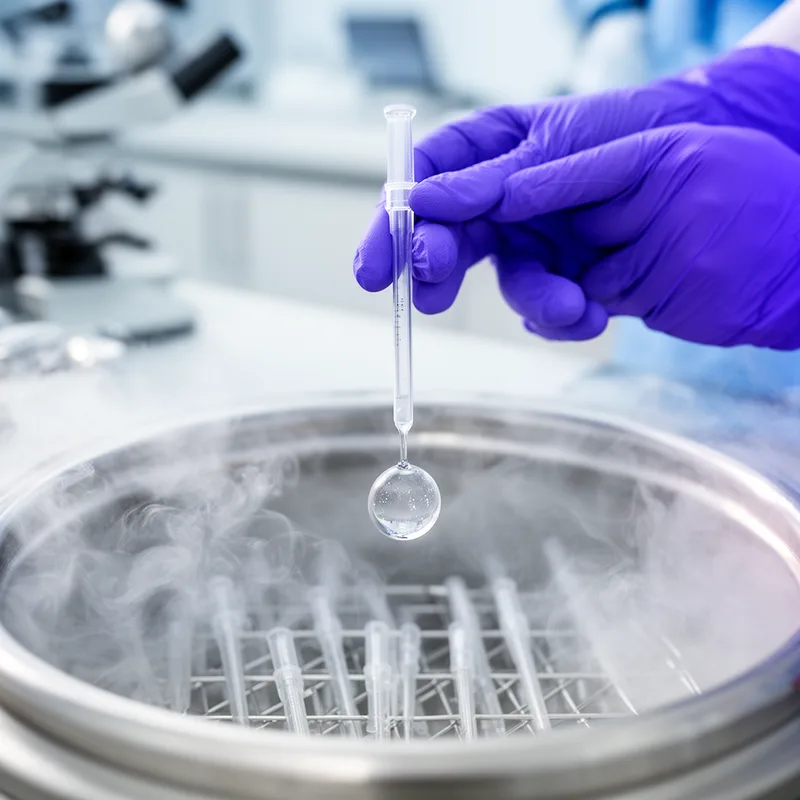
to vitrify


 1
9.3
1
9.3
- verb
- /ˈvɪtrɪfaɪ/
- Specialized
- When preparing the biological material, the team ensured it would vitrify to maintain its integrity during storage.
Examples
-
To preserve the cells for future study, scientists decided to vitrify them using a special cryogenic technique.
-
The researcher found that vitrifying the samples prevented ice crystal formation during the cooling process.
-
Any liquid will vitrify, or solidify into a glass, if it's cooled rapidly enough. (See figure 1b.)
Academic text (2012)
Synonyms
 1
8.9
1
8.9
To cool and store cells, tissue, or living things at very cold temperatures so they do not decay
Surface Forms
Morphology
vitrify = vitreous (semi-transparent) = vitr + ify
The technical cryobiology sense is an extension of 'make glass-like' (amorphous solidification), but it relies on the combining form 'vitr-' rather than a familiar standalone base, making it partly accessible but somewhat specialized.
Etymology
Vitrify comes from the Latin root vitrum meaning 'glass'. In medical freezing, to vitrify something is to cool it so fast the liquid becomes a 'glass-like' solid without making ice crystals, so the origin shows it always means to make something 'glass-like'.