

vitrification
- noun
- /ˌvɪtrɪfɪˈkeɪʃən/
- Specialized
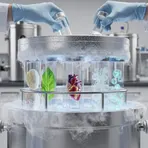
- In actuality, cryonics is achieved through vitrification.
Examples
-
However, vitrification is three times more expensive than using binders and can cost $300 to $600 per metric ton of waste.
Academic text (2000) -
Cryonists at Alcor argue that most of the scientific community is ignorant of vitrification, and that without the knowledge of how vitrification works for the preservation of organs (in practice, that is, not just theoretically), then of course cryonics would seem impossible.
Academic text (2011) -
This process, called vitrification, prevents the egg from expanding and allows the cellular matter to remain intact.
Blog text (1) -
Thus far, eggs frozen with vitrification have a 90 percent survival rate, but no one knows how they'll look 20 years down the road.
Blog text (23) -
At present, the only way to preserve your mind on death is through cryonics, or low-temperature storage with vitrification of tissue.
Blog text (26) -
However, she points out these outcome data largely refer to embryos created with traditional slow-freezing methods, not the newer method of vitrification.
Academic text (2012) -
Cryonists at Alcor argue that most of the scientific community is ignorant of vitrification, and that without the knowledge of how vitrification works for the preservation of organs (in practice, that is, not just theoretically), then of course cryonics would seem impossible.
Academic text (2011) -
The process of vitrification is essential for preserving eggs in fertility treatments by turning them into a glass-like solid.
-
With vitrification, embryos can be stored more effectively, improving their chances of survival during long-term preservation.
-
Researchers are investigating the results of vitrification on biological tissues to enhance their viability during cryopreservation.
Synonyms
 1
8.4
1
8.4

To keep cells, tissues, or organs alive by cooling them to very low temperatures
How Preserved
- Specialized
1
8.4

- Specialized
79
1.6
- Specialized

 1
4.5
1
4.5
Surface Forms
Morphology
vitrification = vitrify (semi-transparent) = vitr + ify + ation
The noun is a regular nominalization of vitrify, but the specialized biological sense is less immediately guessable.
Etymology
Vitrification comes from the Latin word vitrum 'glass' and the ending -fication 'making', so it literally means 'making into glass'. In medicine and labs the word describes rapid cooling that makes cells or fluids into a glass-like solid so ice crystals do not form.