
vestigia
- noun
- /vɛˈstɪdʒiə/
- Archaic
- Scientists pointed to tiny vestigia in the fish's skeleton as evidence of terrestrial ancestry.
Examples
-
Researchers study vestigia to understand how certain species have evolved over millions of years.
-
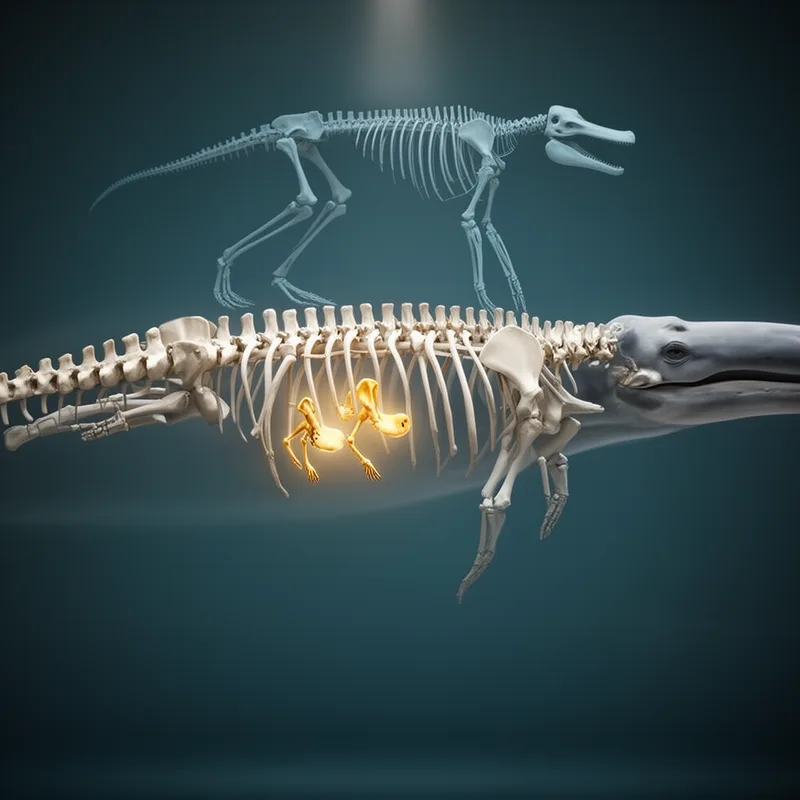
The presence of vestigia in modern whales suggests their ancestors once walked on land.
-
The presence of vestigia in modern whales suggests their ancestors once walked on land.
-
The vestigia of ancient species can be found in modern animals.
-
What are the vestigia of this organism?
-
Scientists pointed to tiny vestigia in the fish's skeleton as evidence of terrestrial ancestry.
-
Researchers study vestigia to understand how certain species have evolved over millions of years.
Synonyms

 23
8.4
23
8.4

A small part that remains from something that once existed
How Developed

Surface Forms
Etymology
Vestigia comes from the Latin vestigium, 'footstep' or 'trace', and is the same root as the English words vestigial and vestige. In biology it means a small body part that is a 'trace' left from an ancestor, like a tiny 'footprint' in the body.