
upthrust
- noun
- /ˈʌpˌθrʌst/
- Specialized
- The tectonic activity caused an upthrust of land, forming new mountain ranges over millions of years.
Examples
-
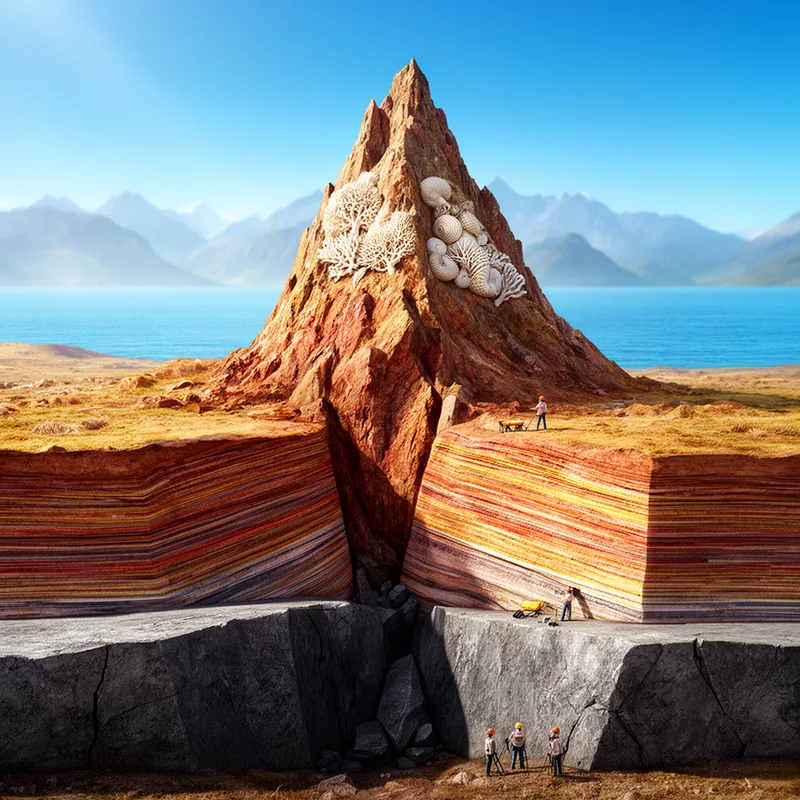
Ancient coral reefs can be found atop mountains created by tectonic upthrust.
-
Geologists studied the recent upthrust along the fault line to understand seismic activity.
-
The Himalayas were formed by the upthrust of the Earth's crust millions of years ago.
-
The upthrust in the region created a new mountain range.
-
Geologists studied the upthrusts along the fault line.
-
The impressive upthrust of the land created a stunning cliff that attracted many hikers and tourists.
-
Geologists studied the upthrust phenomena to understand the forces that shape the Earth's crust.
Synonyms

 2
7.0
2
7.0

A rise of land to a higher level often forming mountains
 2
7.3
2
7.3
A movement that raises part of the ground to form mountains

A rise in the land when rock below pushes it up
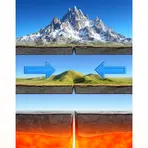
The Earth's movement slowly pushes land higher to form mountains
How High
- Specialized

- Specialized
- Specialized
4
6.8
- Specialized
2
8.5
Surface Forms
Morphology
Etymology
Upthrust comes from up ('up') and thrust ('push'), so it means a 'push up' of the land when the Earth's forces lift ground into mountains.