
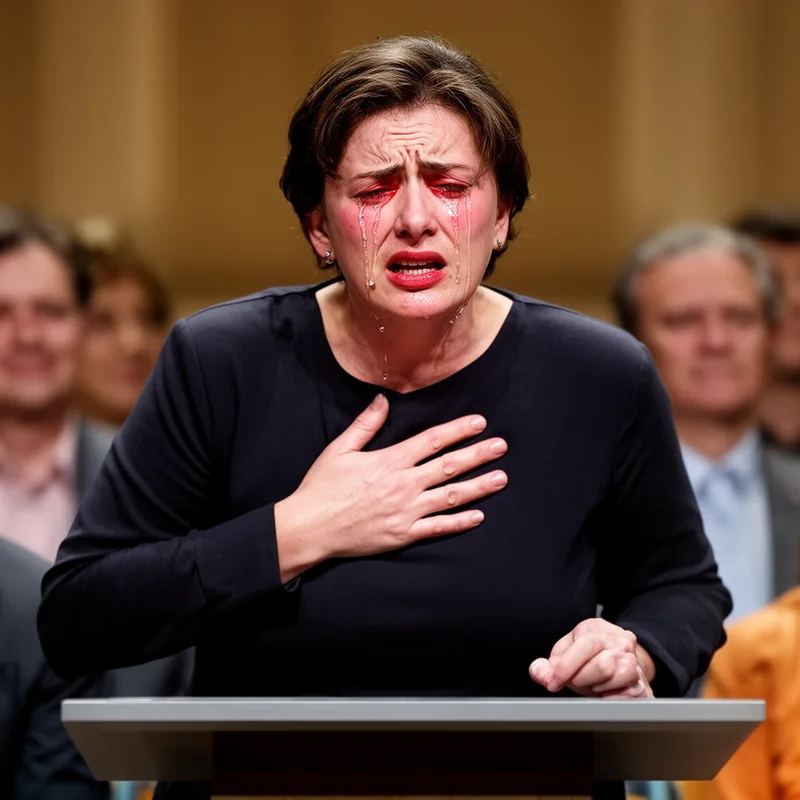
to unbridle emotion
- phrasal verb
- She decided to unbridle emotion and spoke honestly about her fears.
Examples
-
During the ceremony, he allowed himself to unbridle emotion in front of the attendees.
-
Artists often unbridle emotion through their creative work.
-
Don't unbridle emotion too quickly!
-
It's time to unbridle emotion and let your feelings show!
-
During the concert, the singer decided to unbridle emotion and shared her personal story with the audience.
-
He chose to unbridle emotion during the therapy session, expressing his grief openly.
-
The film made me unbridle emotion, as I couldn't hold back my tears at the touching scene.
Synonyms

 61
4.1
61
4.1

To show strong feelings, especially when angry
 38
3.4
38
3.4
Show or say your emotions to other people
 9
3.7
9
3.7
Say something honestly and with strong feeling
 8
6.4
8
6.4
Talk openly about your deepest feelings when you feel upset
 3
5.5
3
5.5
To let strong feelings come out after holding them in
 2
3.4
2
3.4
Show your feelings with words, actions, or your face
 1
8.7
1
8.7
To show feelings openly, like warmth or joy
 1
6.5
1
6.5
To express strong feelings such as anger or sadness


 1
7.0
1
7.0
To show your feelings openly so other people can see them

Show strong feelings openly without holding back

To tell someone your secret or worrying thoughts and feelings
Antonyms

How Expressive

- Informal
33
3.9
2
3.4
- Informal
149
2.9
108
4.2
- Archaic
Surface Forms
Morphology
unbridle + emotion
The sense 'to express feelings openly and without restraint' is directly derivable from the morphological parts: un- (remove) + bridle (to restrain) + emotion, i.e. removing restraint on feelings. Although 'unbridle' is somewhat literary/less frequent, the composition parallels common verbs like 'unleash' and similar cross-linguistic patterns, so a learner who knows the constituents will readily infer the meaning.
Etymology
The phrase unbridle emotion comes from the image of taking a bridle off a horse so the horse is no longer controlled and can run free. So, it means 'to express feelings openly and without restraint'.