
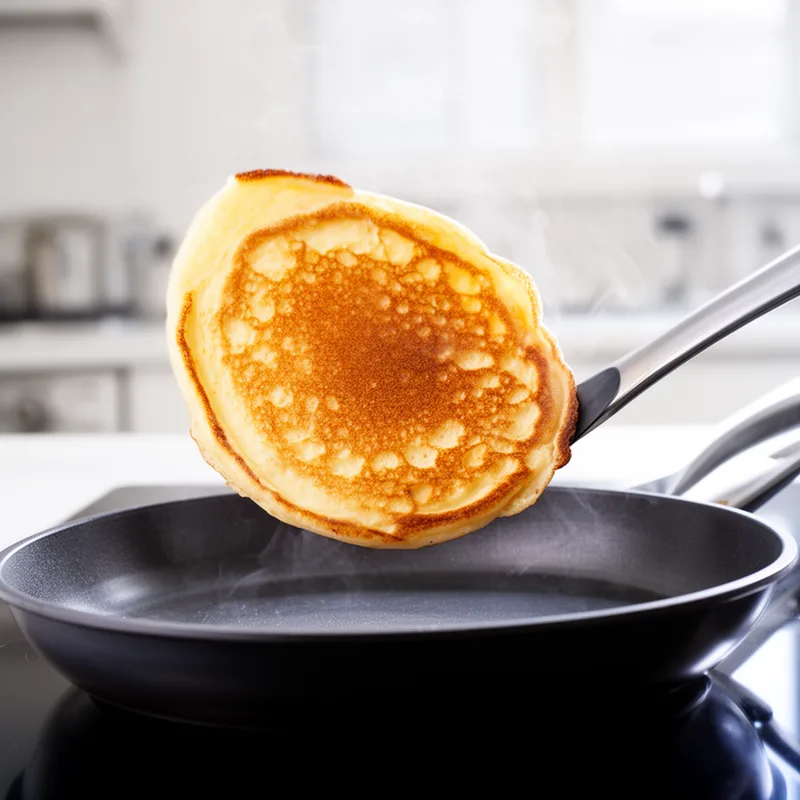
to turn over
 31
2.6
31
2.6

- phrasal verb
- /tɜrn ˈoʊvər/
- "Why don't you go ahead and turn over the next card?" Penny said.
Loading YouTube…
Watch on YouTubeOnce that's hardened, turn it over and start again.
- Once that's hardened, turn it over and start again.
- So the kayak turns over and push myself out of the kayak.
- And the tank slipped off the off the passageway and turned over into a marsh.
- However, if for as you're turning those items over, I play a congruent sound.
Examples
-
All right, let's go ahead and turn this over and get that bolted down.
-
Okay, turn it over for me.
-
Then turn the whole thing over, OK?
-
So turn the magazine over and you get the bad news.
-
When I give the signal, you may turn over your papers.
-
So let's turn this over and you can see how I fixed this.
-
A baby lay on the mattress trying to turn over onto its back.
Fiction book (1995) -
Then what you do is you turn the record over and play the A-side and you get a visual display with lyrics.
-
Linda picked up the plastic vial again, turned it over and over in her hand, listening to the silence.
Fiction book (1995) -
To bake a cake evenly, you should turn over the pan halfway through.
Synonyms
 ∞
1.0
∞
1.0
To move across the sky or land with a smooth swaying motion
 354
1.8
354
1.8
To turn or toss something quickly with a light hand movement
 148
1.8
148
1.8
To move something so it leans or falls to one side
 144
3.0
144
3.0
To turn around a central point, like a wheel or planet
 68
2.6
68
2.6
Make something fall by hitting or bumping it
 41
2.5
41
2.5
Turn something so the side that was up is now down
 30
4.1
30
4.1
Make something flip so it is upside down or on its side
 30
1.4
30
1.4
To turn your body or an object so the other side faces up
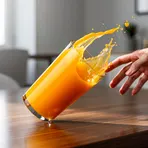 27
3.0
27
3.0
Make something fall from a standing position
 23
5.5
23
5.5
Turn something so one end points up
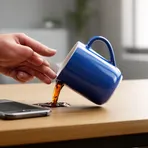
To make something that stands fall over

To flip over so the bottom becomes the top, often about boats or cars
Antonyms


How Far

Surface Forms
Morphology
turn + over
The sense 'to think carefully about' is a metaphorical extension of the physical idea of 'turning' something 'over' (as if examining all sides). While learners who know 'turn' and 'over' may get a hint from this physical image, the mental/figurative reading is not fully predictable without exposure to the phrasal verb pattern, so it is only partially transparent.
Etymology
Turn over comes from the simple picture of using turn and over to move something so its other side faces up. So when you turn over a pancake or a page, you 'flip' it to cook or read the other side.