
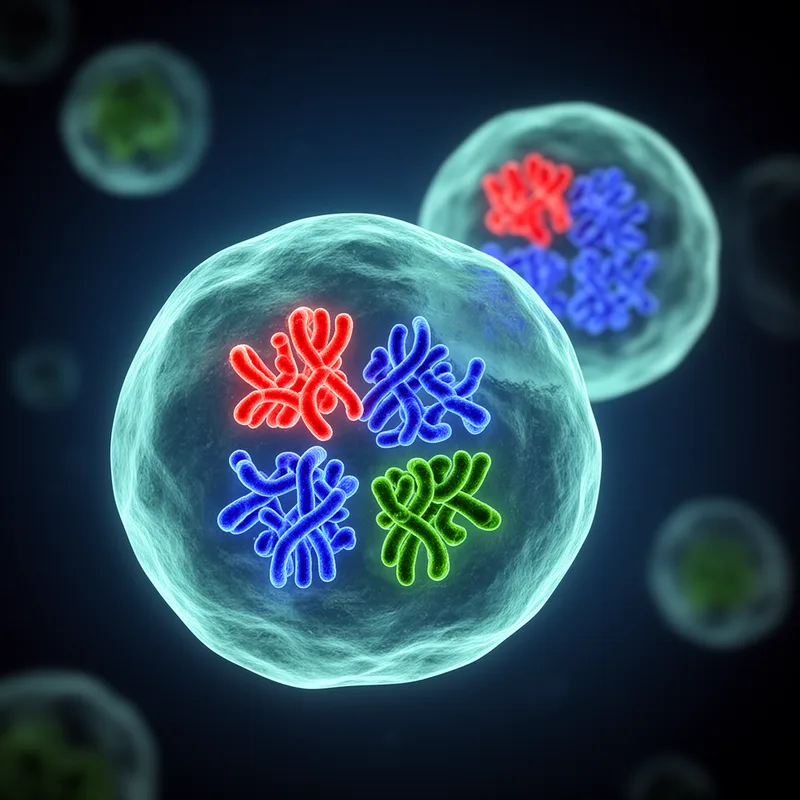
triploid
- noun
- /ˈtrɪp.lɔɪd/
- Specialized
- After several experiments, they successfully created triploids that were more resilient to environmental changes.
Examples
-
Recent studies of the vegetatively prolific lake cress (N. aquatica) have revealed surprisingly high levels of interpopulational genetic variation in this sexually sterile triploid (1).
Academic text (1996) -
An unexpected snag occurred in early June when the 300 carefully leaned triploids all died in a laboratory accident at Rutgers, just before the study was to begin.
Academic text (1992) -
To find alternatives, the researchers have begun evaluating a few seedless watermelon varieties, called triploids, that have resistance or tolerance to yellow vine disease.
Academic text (1997) -
The researchers studied a new strain of triploid that showed remarkable growth rates in controlled conditions.
-
Farmers reported that the triploids they cultivated produced a more consistent yield compared to traditional varieties.
How Many Sets
- Specialized

- Specialized
- Specialized
- Specialized
- Specialized
Surface Forms
Morphology
triploid = ploid (opaque) = tri + ploid
The word clearly contains the prefix 'tri-' meaning three, but the remaining element is a technical combining form, so the full meaning is not readily recoverable for an average learner.
Etymology
Triploid comes from the beginning tri- meaning 'three' and the ending -ploid meaning 'fold' or 'set'. So a triploid is an organism or cell that has 'three sets' of chromosomes instead of the usual two.

