
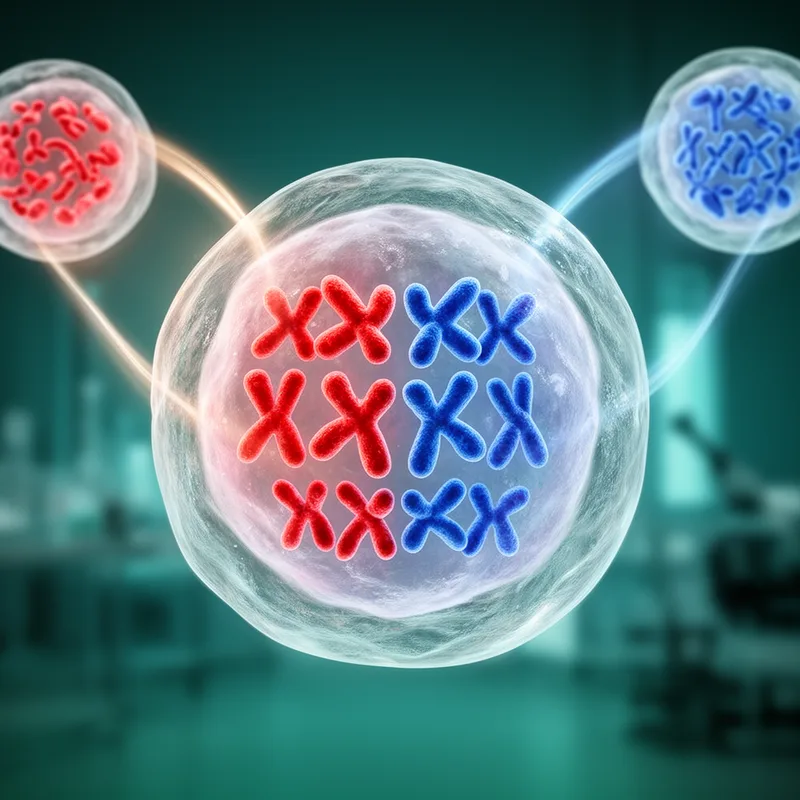
diploidy
- noun
- /dɪˈplɔɪdi/
- Specialized
- Thus, from the standpoint of genetic expression, an absolute chromosome number cutoff between diploidy and polyploidy does not exist.
- genetic diploidy
- diploidy and polyploidy
Examples
-
In animals, diploidy is crucial as it allows offspring to receive genetic material from both parents.
-
But what about the evolution of genetic diploidy at high chromosome numbers?
Academic text (2002) -
Thus, in the group as a whole, chromosome numbers would continue to increase while genetic diploidy was maintained.
Academic text (2002) -
Two main models have been proposed to explain the evolution of the chromosomal polyploidy-genetic diploidy paradox.
Academic text (2002) -
If this is true, then each homosporous lineage could have evolved the condition of chromosomal polyploidy with genetic diploidy independently.
Academic text (2002) -
These purposes include the quantification of the impact of a mutation on a population, analyzing the effect of inbreeding in human populations, and analyzing models of the evolution of recombination and diploidy (Crow 1992).
Academic text (1992) -
The study focused on diploidy, revealing how organisms with two sets of chromosomes adapt better to environmental changes.
-
Researchers found that diploidy in certain plants contributes to their resilience against diseases.
How Many Sets
- Specialized

- Specialized
- Specialized
- Specialized
- Specialized
Surface Forms
Morphology
Etymology
Diploidy comes from the Greek root diplo- meaning 'double', like the English word 'double'. So Diploidy is the condition of having two complete sets of chromosomes, a 'double' set usually one set from each parent.

