
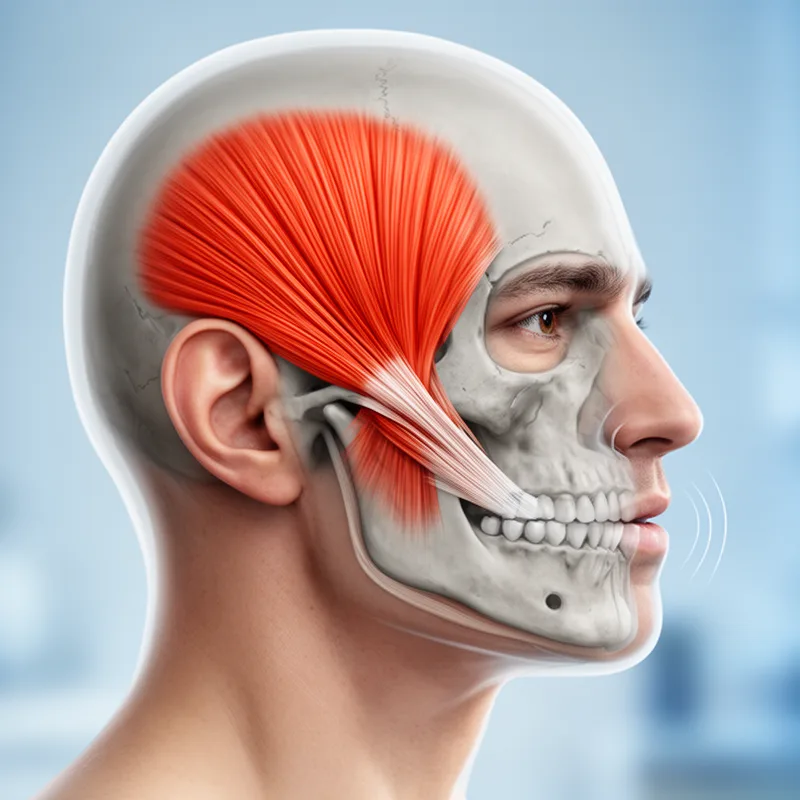
temporalis


 1
9.0
1
9.0
- noun
- /ˌtɛmpəˈrælɪs/
- Specialized
- The temporalis muscle is essential for closing the jaw during chewing.
- temporalis muscle
- temporalis fascia
- temporalis fascia graft
Examples
-
Larger dural defects were repaired with temporalis fascia graft patching.
Academic text (2005) -
The ability to efficiently masticate was enhanced by an increase in the size of the temporalis muscle.
Academic text (2003) -
The round window and the oval window were covered with temporalis fascia.
Academic text (2007) -
The temporalis runs in an inferosuperior direction from the jaw to the skull roof.
Academic text (2003) -
The eustachian tube orifice was sealed with temporalis muscle tissue.
Academic text (2007) -
The fascia is usually obtained through a postauricular incision from the lateral surface of the temporalis muscle.
Academic text (1995) -
The leverage of the pterygoideus was best when the jaw was open, an arrangement that powered the snapping motion; the leverage of the temporalis was best when the jaw was closed, which provided static pressure.
Academic text (2003) -
The defect was then closed in three layers with temporalis fascia, temporalis muscle tissue, and homograft septal cartilage.
Academic text (2007) -
The area was repaired with a free temporalis fascia graft, Avitene, Gelfoam, and a middle meatal spacer.
Academic text (2008) -
If the defect is small, temporalis fascia will suffice, but larger defects require fascia lata reinforced with temporalis muscle and cartilage to hold the fascia in place.
Academic text (2007)
Synonyms

A large muscle on the side of the head that lifts the lower jaw to close the mouth

A large fan-shaped muscle on the side of the head that helps raise and close the lower jaw

A broad muscle on the side of the head that lifts the lower jaw to close the mouth
Compounds

- Specialized
An artery that carries blood to the front part of the temporal lobe on the side of the brain

- Specialized
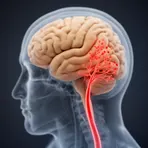
A small artery in the head that supplies the middle part of the temporal lobe
- Specialized
A small artery that brings blood to the surface at the back of the temporal lobe
- Specialized
A large muscle on the side of the head that lifts the lower jaw to close the mouth
- Specialized
A large fan-shaped muscle on the side of the head that helps raise and close the lower jaw

Surface Forms
Etymology
Temporalis comes from the Latin tempora, meaning 'the temples' or the side of the head, and it is like the English word temple. So the temporalis is the broad muscle at your temple that helps close the jaw when you chew.