

musculus temporalis
- noun
- /ˈmʌskjʊləs tɛmˈpɔrəlɪs/
- Specialized
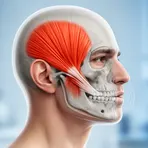
- The musculus temporalis plays a crucial role in chewing by elevating the mandible.
Examples
-
Damage to the musculus temporalis can result in difficulty closing the mouth.
-
Can you feel the musculus temporalis when you clench your jaw?
-
During surgery, the musculus temporalis is sometimes used for reconstructive procedures in the jaw area.
-
The musculus temporalis is essential for chewing.
-
The musculus temporalis helps lift the jaw when you eat, making it essential for chewing food.
-
When the musculus temporalis contracts, it closes the mouth and allows us to grind our meals.
-
Physical therapy can strengthen the musculus temporalis to improve jaw function after an injury.
Synonyms


 1
9.0
1
9.0
A broad fan-shaped muscle on the side of the head above the ear that helps close the jaw

A large fan-shaped muscle on the side of the head that helps raise and close the lower jaw

A broad muscle on the side of the head that lifts the lower jaw to close the mouth
Surface Forms
Morphology
The term is transparently compositional: 'musculus' denotes a muscle and 'temporalis' specifies the particular (temporal/chewing) muscle, so the overall meaning — the temporalis muscle that closes the jaw — is directly derivable from the parts. Although the phrase is technical and Latin-derived, the constituents (and common cognates like 'muscle' and 'temporal') make the meaning predictable to a learner who knows both words.
Etymology
Musculus temporalis comes from Latin: musculus means 'little mouse' and temporalis means 'temple', the side of the head. One popular image says that when you bite down the muscle at your temple looks like a small mouse moving under the skin, so the name helps you remember this muscle that moves the lower jaw and helps you chew.