

taxonomic group


 1
7.0
1
7.0
- noun
- /tækˈsɒnəmɪk ɡruːp/
- Specialized
- The biologist classified the species into several distinct taxonomic groups based on their evolutionary relationships.
- species within a taxonomic group
- richness among taxonomic groups
- distribution of entire taxonomic groups
Examples
-
Thus, for example, data sets on the global distribution of entire taxonomic groups—mammals, birds, amphibians—have now been compiled.
Academic text (2004) -
Summary of the prevalence of eight major threats to Australia's threatened species, expressed as the percentage of species affected by taxonomic group and habitat.
Academic text (2011) -
Such criteria should be easily and consistently applied across all biogeographic regions and taxonomic groups.
Academic text (2004) -
One limitation of this technique is that a single primer set can only target one taxonomic group.
Academic text (2008) -
Hauled fish and prawns were sorted immediately into taxonomic groups, often to the family level, and then weighed.
Academic text (1995) -
We tabulated predation events by year since burn, predator species, taxonomic group, and habitat association.
Academic text (2017) -
Sampling effects may also limit the power to discern coherent responses from individual taxa or taxonomic groups.
Academic text (2008) -
Are similar taxonomic groups involved in decomposition irrespective of biomes and latitude?
Academic text (2002) -
We created a training set of images of 54 taxonomic groups covering most of the stoneflies, caddisflies, and mayflies found in the US Pacific Northwest.
Academic text (2017) -
Rules of thumb adopted across taxonomic groups are problematic, as they ignore the variability inherent among biota for the sake of simplicity.
Academic text (2005)
Synonyms
 ∞
1.0
∞
1.0
A number of people or things seen as one unit
 148
2.9
148
2.9
A type of thing that has similar features
 66
7.5
66
7.5
A group of related animal or plant families in science
 53
4.8
53
4.8
One of the main groups scientists use for living things like animals or plants
 22
3.7
22
3.7
A group of things that share the same features
 16
3.6
16
3.6
A smaller part of a larger group that has its own role or feature
 16
2.5
16
2.5
All animals, living and extinct, that are not plants or fungi
 10
2.7
10
2.7
People or things that form one unit
 8
7.7
8
7.7
A major group used to classify plants
 4
8.7
4
8.7
A large group of animals or plants with the same basic body structure
 3
8.7
3
8.7
A group of plants or animals that come from the same ancestor and include all its descendants
 3
7.5
3
7.5
A group of things that share common features
 1
2.0
1
2.0
A number of animals seen together as one unit, like a herd
 1
9.1
1
9.1
A group of living things that scientists put together, like a species or family
 1
7.0
1
7.0
A group inside a larger family of animals or languages
 1
6.8
1
6.8
A group of animals or plants within a species with small differences that live in one area

A rank in the classification of living things like species or family that shows how they are related
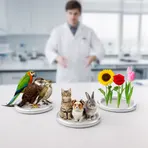
A group of plants or animals put together because they share traits
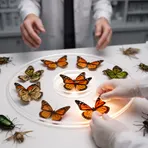
A group within a genus that contains closely related species

A group of related plants or animals below a tribe in biology

A temporary group for living things, often fossils, whose relations to others are unclear
How Specific

Surface Forms
Morphology
Given knowledge of 'taxonomic' (pertaining to classification of organisms) and 'group' (a set or unit), the meaning 'a group defined by taxonomy' is directly and compositionally derivable. The noun phrase is technical but regular and has clear cross-linguistic parallels, so learners who know the constituents will understand it.
Etymology
Taxonomic group comes from the idea of sorting living things into named groups: taxonomic means 'arranged' and group means 'a set', so imagine placing similar living things into labeled boxes. That's why it means 'a group of similar living things'.