

to take on
 146
3.6
146
3.6

- phrasal verb
- /teɪk ɑn/
- As the project progressed, it began to take on a more professional appearance.
- take on new meaning
- take on special significance
- take on new dimensions
Loading YouTube…
Watch on YouTubeSo I do feel like they take on their own life.
- So I do feel like they take on their own life.
- We didn't realise that what we created would take on a life of its own.
- So war is gonna take on a whole new shape for sure.
- And So what you do is you take on the practices of happiness
- And over time this comes to take on a greater strength.
Examples
-
So it it, it kind of took on a life of its own.
-
Even a bad teacher knows that a class takes on a life of its own.
Academic text (2011) -
So I do feel like they take on their own life.
-
So as the years went on it, it took on a unique value.
-
So war is gonna take on a whole new shape for sure.
-
Room service took on a whole new meaning.
-
Today we're going to take on the term word salad.
-
This is the time when your life could take on a different level of propulsion.
-
The music gets faster, and the dancing takes on a more frantic and remarkable quality.
Fiction book (1992) -
Our conceptualization of the physical space takes on a whole new dynamic as students interact with their surroundings.
Academic text (2012)
Synonyms
 ∞
1.0
∞
1.0
Move into a position or seat
 458
3.3
458
3.3
To get something or learn a skill over time
 135
3.2
135
3.2
To take on a new role, responsibility, or attitude
 37
3.7
37
3.7
To start to form and become clear, for example an idea or plan
 23
4.1
23
4.1
Put on a particular appearance or form
 4
3.5
4
3.5
To begin to develop and become clear in shape or idea
Antonyms

How Noticeable

Surface Forms
Morphology
The sense 'to compete against' is a metaphorical extension of 'take' combined with the particle 'on' and is not a simple literal composition of the two words. While a learner who knows phrasal-verb patterns might infer a confrontational or assume-responsibility sense, the specific meaning 'face/compete against' is not fully predictable without exposure, so it is only partially transparent.
Etymology
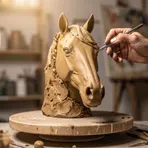
Take on is like putting clothes on: when a leaf takes on a new colour or a room takes on a quiet mood, it begins to wear that quality. So the phrase means 'to begin to have' a particular form or characteristic.