

swamp blueberry
- noun
- /swɑmp ˈbluːbɛri/
- US
- The swamp blueberry thrives in moist, acidic soils found throughout eastern North America.
Examples
-
Many cultivated varieties of blueberries can be traced back to the swamp blueberry.
-
Wildlife often feed on the swamp blueberry during the late summer months.
-
I picked some swamp blueberries in the forest.
-
The swamp blueberry is native to eastern North America.
-
The swamp blueberry is known for its sweet, edible berries that are popular in jams and desserts.
-
In the wetlands, I often spot the swamp blueberry bushes filled with ripe berries ready for picking.
-
Farmers cultivate swamp blueberry plants for their fruit, which is a staple in many local dishes.
Synonyms

 1
1.0
1
1.0

A small bush that grows blueberries
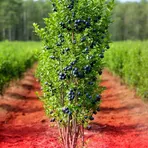
A tall bush from eastern North America that makes sweet blue-black berries used to grow blueberries

A tall bush that produces the blueberries grown on farms
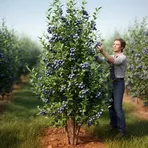
A tall bush that produces blueberries you can eat
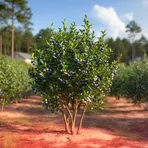
A shrub that makes small sweet blueberries grown in the southeastern United States
Surface Forms
Morphology
This is a straightforward noun compound where 'swamp' specifies the habitat or type of the 'blueberry', so the meaning (a blueberry that grows in swamps) is directly and transparently derivable from the constituent words. The modifier+noun composition is a regular, cross-linguistically common pattern and would be immediately comprehensible to a B1 learner who knows both constituents.
Etymology
Swamp blueberry comes from a simple image: a blueberry bush growing in a swamp, wet, muddy ground. That's why the name is used for the 'wild blueberry' bush that makes edible blue berries and usually grows in wet places.