
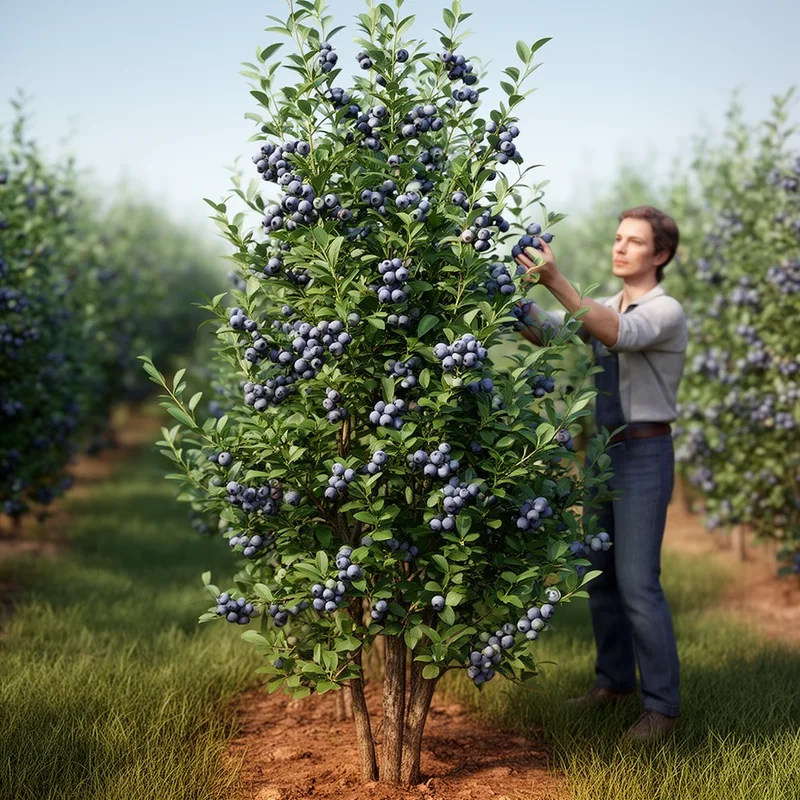
high-bush blueberry
- noun
- /haɪ bʌʃ ˈbluːbɛri/
- US
- She planted several high-bush blueberries in her backyard to enjoy fresh fruit during the summer.
Examples
-
The garden was filled with lush plants, including the tall high-bush blueberry that produced sweet, ripe berries.
-
The high-bush blueberry plant thrives in well-drained soil.
-
The high-bush blueberry is a common sight in commercial berry farms throughout North America.
-
Unlike wild varieties, the high-bush blueberry grows taller and produces larger fruit.
-
We planted several high-bush blueberry shrubs to enjoy fresh berries in the summer.
-
I love picking high-bush blueberries in the summer.
-
In spring, the high-bush blueberry bushes bloom with white flowers before yielding plump blue-black berries.
Synonyms

A tall bush that produces the blueberries grown on farms
A tall bush from eastern North America that makes sweet blue-black berries used to grow blueberries

A tall bush that grows in wet ground and makes dark blue berries you can eat in eastern North America
Antonyms

How Sweet
- Specialized

- US


 1
7.5
1
7.5
- Specialized
1
7.4
28
1.3
Surface Forms
Morphology
high-bush + blueberry
The noun phrase denotes a type of blueberry characterized by a tall/shrubby growth habit; this meaning is directly compositional from 'high' + 'bush' modifying 'blueberry' (a berry-producing shrub). Even if 'high-bush' is not listed separately, an average B1 learner who knows 'high', 'bush', and 'blueberry' can infer it refers to the taller variety (contrasting with low-bush), a transparent and cross-linguistically common descriptive pattern.
Etymology
High-bush blueberry: The name high-bush blueberry comes from how the plant looks: it grows on a tall bush and produces blue berries. The word high simply means 'taller' than the 'low' wild kinds, so the name helps you know this is a taller shrub often grown on farms for larger, edible berries.