

Vaccinium corymbosum
- noun
- /ˌvækɪˈniːəm kɔːrɪmˈboʊsəm/
- Specialized
- With proper care, Vaccinium corymbosum can thrive in acidic garden soils and produce abundant fruit.
Examples
-
The berries of Vaccinium corymbosum are rich in antioxidants and enjoyed fresh or in baked goods.
-
In the summer months, Vaccinium corymbosum bushes are laden with clusters of ripe, bluish-black berries.
-
Vaccinium corymbosum is commonly grown in commercial blueberry farms across North America.
-
The Vaccinium corymbosum is a popular choice for home gardens.
-
Farmers in Maine cultivate Vaccinium corymbosum for its sweet berries.
-
Vaccinium corymbosum is a key plant in the production of blueberries, particularly in eastern North America.
-
Many gardeners choose Vaccinium corymbosum for its attractive foliage and the delicious berries it produces.
Synonyms
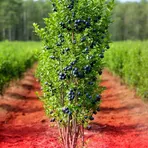
A tall bush from eastern North America that makes sweet blue-black berries used to grow blueberries

A tall bush that produces blueberries you can eat
Surface Forms
Morphology
Vaccinium + corymbosum
This is a Latin binomial (scientific) name: the genus 'Vaccinium' is taxonomic and the species epithet 'corymbosum' is not an ordinary English word, so a B1 learner who knows the constituent strings would not be able to derive the meaning 'blueberry shrub' from them. Scientific names function as technical labels and require botanical or Latin knowledge beyond B1 vocabulary, making the expression non-compositional for typical learners.
Etymology
Vaccinium corymbosum comes from old Latin and Greek words: Vaccinium was a Latin word for a 'berry' and corymbosum comes from a Greek word for a 'cluster' or 'bunch' of flowers. So the name simply shows a 'berry plant with flower clusters', which fits this shrub that produces many blueberries.

