
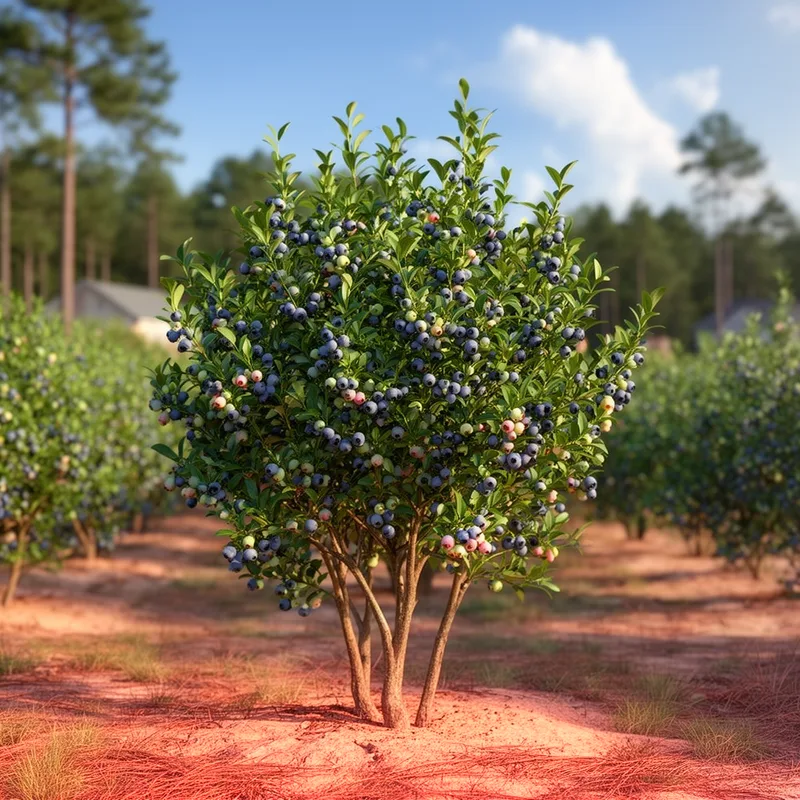
rabbiteye blueberry
- noun
- /ˈræbɪtˌaɪ ˈbluːbɛri/
- Specialized
- Rabbiteye blueberries thrive in the Southeast's warm, humid climate.
Examples
-
"Most rabbiteye blueberries need cross-pollination for good fruit set, so two varieties that bloom around the same time should be planted," he added.
Blog text (9) -
Rabbiteye blueberries attract many visitors to the orchard during the summer.
-
Rabbiteye blueberries, native to the southeastern U.S., grow best in East Texas, he said.
Blog text (9) -
Rabbiteye blueberries are often used in making jams and pies.
Synonyms

A bush that produces small sweet blueberries grown in the southeastern United States

A bush that grows small edible berries often used for canning

A shrub that produces edible berries grown in the southeastern United States for canning
Surface Forms
Morphology
The compound is compositionally transparent: it denotes a type/subtype of blueberry associated with the rabbiteye shrub, so the meaning follows directly from 'rabbiteye' (a shrub) + 'blueberry' (the fruit). This fits the common noun-noun subtype pattern and would be understandable to a B1 learner who knows both constituent words, although 'rabbiteye' is somewhat specialized botanical vocabulary.
Etymology
Rabbiteye blueberry may come from a simple picture: people thought the small, round blueberries looked like a rabbit's eye. That's why the name rabbiteye now refers to the shrub grown for those small, edible blueberries.

