

Vaccinium ashei
- noun
- /ˌvækɪˈniːəm ˈeɪʃaɪ/
- Specialized
- The berries of Vaccinium ashei are commonly processed in the canning industry.
Examples
-
Unlike some other blueberries, Vaccinium ashei thrives in the hot climate of the southeastern United States.
-
Farmers in Georgia grow Vaccinium ashei for its delicious fruit.
-
Many growers in Georgia cultivate Vaccinium ashei for its high-yield berry harvests.
-
The Vaccinium ashei produces sweet, juicy berries.
-
Many growers in Georgia cultivate Vaccinium ashei for its high-yield berry harvests.
-
The berries of Vaccinium ashei are commonly processed in the canning industry.
-
Farmers in Georgia grow Vaccinium ashei for its delicious fruit.
Synonyms
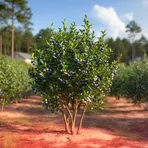
A shrub that makes small sweet blueberries grown in the southeastern United States

A bush that grows small edible berries often used for canning

A bush that produces small sweet blueberries grown in the southeastern United States
Surface Forms
Morphology
Vaccinium + ashei
This is a scientific binomial: the genus 'Vaccinium' signals a berry-producing shrub (e.g., blueberries/cranberries), so a learner who knows that constituent can infer it is a type of Vaccinium. However, the specific epithet 'ashei' is a proper name without inherent meaning (it does not tell native range or commercial use), so the full, detailed sense is not predictable from the parts.
Etymology
Vaccinium ashei comes from the old Latin word Vaccinium, which means 'berry', and the second part ashei is the name of a person, Mr. Ashe, who first described the plant. So the name simply says 'Ashe's berry', which helps you remember it is a shrub grown for edible berries.

