

subject
 427
4.1
427
4.1

- noun
- /ˈsʌbʤɪkt/
- Formal
- The people in the labs, they were just test subjects.
- human subjects
- research subjects
- study subjects
Loading YouTube…
Watch on YouTubeI was depressed because I had been the subject of a huge scandal.
- I was depressed because I had been the subject of a huge scandal.
- The study involved having subjects listen to a story.
- They all were gendered subjects along different dimensions.
- Why would they put the the human subjects through SRA?
- Were they in the room with the subject, observing him suffer?
- They did confirm that the subject was not smiling whatsoever.
- OK Sharon Post, The subject is cursing at my dog.
- Yeah, I, I am the most fascinating subject that I've ever come across.
Examples
-
It is a beautiful subject and I love it dearly.
-
In any future research on the subject, two methods of documentation may be employed.
Academic text (2011) -
The study involved having subjects listen to a story.
-
I simply wanted to know more about a particular subject, and it was rewarding.
Academic text (2008) -
The surveys were approved by the Human Subjects Review Board of the university.
Academic text (2008) -
Regarding their experience with the Internet, subjects were classified into two major groups.
Academic text (2008) -
The interview lasted about two hours, and all subjects were paid $25 for completing the interview.
Academic text (2008) -
Dalcroze teachers base their approaches to a subject on their own experiences and those of their students.
Academic text (2011) -
Our subject here has a long scar on his abdomen, a surgery scar.
-
The artist chose a model as the subject for her latest painting.
Synonyms
 44
3.5
44
3.5
A person who takes part in an experiment so others can see the results
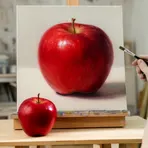
A person, thing, or place someone shows in a picture
Compounds










- Specialized
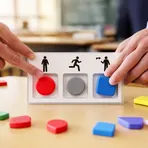
A part of a sentence that shows what it is about and may do the action or be described
How Central
- Specialized
 12
3.8
12
3.8
- Formal
427
4.1
295
2.4
889
2.5
84
3.4
Surface Forms
Etymology
The word subject meaning a person or thing observed comes from sub- ('under') and -ject ('throw'), so it originally meant 'something put under attention'. That is why the person in a portrait or the item in a study is called the subject.