

stinging
- adjective
- /ˈstɪŋɪŋ/
- Her stinging remarks left him speechless and hurt.
Examples
-
The critic wrote a stinging review that upset the director.
-
He couldn't ignore her stinging comments about his performance.
-
You dress me up as a bumblebee and say I'm stinging all night, girl.
-
Athens, still stinging from their previous loss, was no fan of Sparta and gave shelter to the Exiles from Thebes.
-
One amasses silence, another chastises silence with nettles, stinging ferns I oscillate in their jaws.
Synonyms

 50
4.1
50
4.1

Very direct and harsh in a way that can hurt people
 47
3.9
47
3.9
Very strong and unpleasant to the senses, like bright light or bitter taste
 46
4.2
46
4.2
Harsh critical words or actions that hurt others
 18
6.5
18
6.5
Showing little concern for other people's feelings
 9
8.4
9
8.4
Full of angry, bitter words in a speech or argument
 5
7.0
5
7.0
Very harsh words or writing that attack someone


 1
6.7
1
6.7
Words said to hurt or criticize someone
 1
7.2
1
7.2
A very harsh remark that tries to hurt someone
 1
6.7
1
6.7
A sharp, biting remark that hurts or criticizes

Harsh, sharply critical words that hurt people

Very hurtful in words, or sharply cold in weather

Saying harsh words to criticize someone or something

Harsh and hurtful in speech or writing

Very sharp and unpleasant in a way that causes strong pain or shock

Very harsh and sharply critical, for example in a review

Showing strong hate and trying to hurt someone

Saying harsh, mean things that hurt people
Antonyms


Compounds
 1
4.6
1
4.6
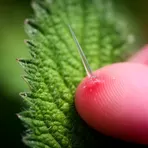
A plant with leaves that have tiny hairs which make your skin feel hot and sore when touched
- Specialized
A sharp hair on plants like nettles that releases liquid causing a burning feeling when touched
How Harsh

Surface Forms
Morphology
Etymology
Stinging comes from the verb sting, meaning 'to prick' or 'hurt' like an insect. People compare sharp words to that quick pain, so a 'stinging' remark is a sharp, hurtful comment meant to wound or embarrass.