

stifling
 4
5.3
4
5.3

- adjective
- /ˈstaɪflɪŋ/
- The air felt stifling in the crowded subway car, making it hard to catch my breath.
Loading YouTube…
Watch on YouTubeI, I guess that's my, that's my best guess that, that's why some writers think that that outlining is stifling.
- I, I guess that's my, that's my best guess that, that's why some writers think that that outlining is stifling.
- This is where the rational is actually an achievement, but it's also for Nietzsche, somewhat stifling, as we'll see.
- But one of them grew up in a stifling house where nothing could be amiss, and that person wants creative space to to mess things up and to be creative.
- Like what is the right amount of submission to the relationship and at what point does it become controlling or stifling?
Examples
-
The room was absolutely still, the heat more and more stifling.
Fiction book (1997) -
This 'marvellous' city can be stifling.
-
It's a little stifling in this apartment.
-
The room was hot and stifling because it had only one small window.
Fiction book (1996) -
As for the room where the women gathered, although bigger, it was stifling and crowded.
Fiction book (1998) -
Under the afternoon sun, the restaurant is stifling, and I feel queasy.
Fiction book (2000) -
There, with windows sealed and shades drawn, the air was even more stifling than in the kitchen.
Fiction book (1997) -
When life feels stifling, like Mirkwood, I tend to only see what's right in front of me.
Blog text (6) -
But then the stifling pall of grief he had borne all day fell on him again.
Fiction book (1991) -
Under the corrugated-tin roof, the straw-fragrant heat formed a room of its own, stifling and luxurious.
Fiction book (1993)
Synonyms
 29
3.4
29
3.4
Too warm and without fresh air
 19
6.3
19
6.3
Heavy and uncomfortable, making people feel sad, worried, or tired
 13
2.7
13
2.7
A room with little fresh air that feels uncomfortable to breathe in
 5
5.3
5
5.3
Very hot and humid in an uncomfortable way
 1
5.1
1
5.1
Making it hard to breathe because the air is hot, close, or not fresh


 1
6.7
1
6.7
Thick hot air that makes it hard to breathe
 1
5.0
1
5.0
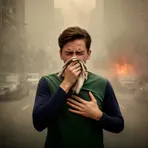
Making it hard to breathe because of smoke, dust, heat, or lack of fresh air
 1
4.8
1
4.8
Weather that is very hot and humid makes you sweat and feel uncomfortable
 1
7.2
1
7.2
Hot, heavy air that feels hard to breathe

Hot, heavy air that makes it hard to breathe
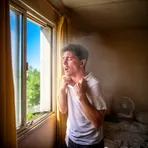
Air that is very close and makes it hard to breathe
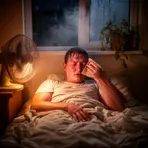
A very hot and humid feeling that makes you uncomfortable
Antonyms


How Oppressive

Surface Forms
Morphology
Etymology
The word stifling comes from the verb stifle, which means 'to choke' or 'to smother'. So stifling describes heat or air that feels like it is stopping you 'from breathing' and makes a place hard to stay in.