

spice tree
- noun
- The spice tree is valued for its fragrant bark used in cooking.
Examples
-
Many chefs use berries from the spice tree to add flavor to their dishes.
-
Many spice trees grow in tropical regions.
-
On our trip, we visited a plantation famous for its spice trees.
-
The spice tree produces fragrant bark.
-
Many chefs use berries from the spice tree to add flavor to their dishes.
-
The spice tree is valued for its fragrant bark used in cooking.
-
On our trip, we visited a plantation famous for its spice trees.
Synonyms

A tropical Asian evergreen tree with sweet-smelling bark used to make cinnamon

A tropical tree from Sri Lanka with thin, fragrant bark used as true cinnamon

A tropical tree with thin, fragrant brown bark that people use as a spice in baking

A Chinese tree whose dried bark is used as a common type of cinnamon

A Chinese tree with strong-smelling bark used to make a type of cinnamon
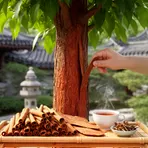
A Chinese tree whose fragrant bark is used as cinnamon

A Southeast Asian tree with strong, sweet bark used as a spice and in traditional medicine

A group of tropical trees with fragrant bark used as a spice like cinnamon
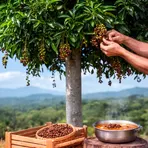
A tree that makes allspice berries used to flavor food
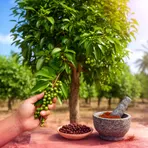
A tropical tree whose dried berries people grind and use as a spice

A tropical tree that makes small berries with a strong smell used as a spice

A tropical evergreen tree that produces the spices nutmeg and mace
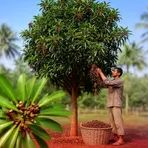
An evergreen tropical tree that makes small brown flower buds used as a spice and in medicine
How Aromatic


Surface Forms
Morphology
The noun phrase 'spice tree' is a straightforward compositional combination: a tree associated with or producing spices/aromatic parts, so a learner who knows 'spice' and 'tree' can infer this meaning. It is a literal, concrete referent rather than an idiom, and similar noun + noun/ noun phrase patterns appear across languages, supporting immediate comprehension at B1.
Etymology
Spice tree The noun spice tree may come from trees whose bark or berries smell like the spices used in cooking. People used those parts to add flavor, so the name came to mean 'a tree that produces aromatic bark or berries used as spices'.