

smoke and mirrors
 19
7.4
19
7.4

- idiom
- /smoʊk ənd ˈmɪrərz/
- Informal
- The politician's promises were just smoke and mirrors meant to distract voters from the real issues.
- more smoke and mirrors
Loading YouTube…
Watch on YouTubeBut his whole facade, much like Trump, is all smoke and mirrors.
- But his whole facade, much like Trump, is all smoke and mirrors.
- I'm not fooled by foam or smoke and mirrors.
- I am not a girl who believes in all those smoke and mirrors.
- It's true that politics is smoke and mirrors.
- So I thought that this demo was smoke and mirrors when I first saw it back at Computex last year.
- It is a bit of a game of smoke and mirrors, and the same is true for ancient marble busts too.
- So gas lighting is really a, a form of it's like smoke and mirrors.
- That's, that's all you know, smoke and mirrors, but I can still choose decency for myself, to use a, a term that you'll see in in a lot of Camus's works.
Examples
-
Many marketing campaigns rely on smoke and mirrors to create a false sense of excitement.
-
Most of these Internet companies are built on smoke and mirrors.
-
By then we had the proof that it was just smoke and mirrors.
-
Everything you see is smoke and mirrors.
-
The 'economy' is a game of smoke and mirrors where most people get taken.
Blog text (8) -
So, it's all smoke and mirrors, and you want me to spend how much for that?
Blog text (9) -
Everything with the Obama administration is smoke and mirrors to make Obama look good.
Blog text (4) -
It's all being held up with smoke and mirrors, and it is completely unsustainable.
Blog text (28) -
All this argument of choice or determinism is smoke and mirrors to distract from the real message.
Blog text (9) -
His crew manipulates numbers and uses smoke and mirrors to distract and cover his incompetence.
Blog text (32)
Synonyms
 163
3.9
163
3.9
An action that makes someone believe something not true
 137
5.5
137
5.5
An attempt to hide a crime or scandal from the public
 129
5.9
129
5.9
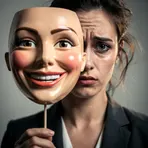
A way of acting that hides how a person really feels
 65
6.1
65
6.1
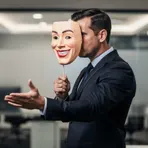
A false claim or action to hide the truth
 46
5.8
46
5.8
A report or statement that gives a false picture of the truth
 42
6.7
42
6.7
A false reason people give to hide what they really want
 35
6.8
35
6.8
Information people spread on purpose to deceive others
 25
7.5
25
7.5
A statement that gives false information about something
 23
6.7
23
6.7
A clue that leads people away from the real issue
 19
9.5
19
9.5
A trick or excuse to hide the real reason
 9
7.1
9
7.1
An action or statement that hides the real reason behind something
 9
8.1
9
8.1
Words or actions that trick people by seeming magical
 7
9.8
7
9.8
Use of clever but false arguments to trick people
 6
9.3
6
9.3
Language that hides the truth by using vague or confusing words
 5
5.1
5
5.1
An action or statement used to hide the real reason and distract people
 4
6.3
4
6.3
An invented story or plan made to trick people
 4
6.8
4
6.8
An attempt to hide bad facts to make something seem better
 3
9.9
3
9.9
To avoid telling the truth by being vague or misleading
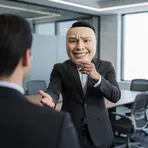 3
9.9
3
9.9
Hiding your true feelings or intentions by pretending
 1
9.6
1
9.6
Talk that tries to trick people with false statements
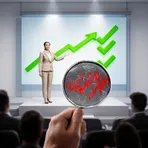

 1
9.4
1
9.4
The appearance of being true when it is false

False or incomplete information spread on purpose to make people believe something untrue

Words or actions that try to trick people into thinking things are better than they are
Antonyms


How Deceptive

Surface Forms
Morphology
The components 'smoke' (which obscures) and 'mirrors' (which create misleading reflections) jointly evoke a metaphor of illusion, so a learner could infer some sense of things being deceptive or not what they seem. However, the specific idiomatic meaning 'deliberate actions or explanations intended to deceive or distract' is figurative and not fully predictable from the parts alone, so a B1 learner would likely need prior exposure to grasp the exact usage.
Etymology
The expression smoke and mirrors comes from magicians on stage who used real smoke to hide parts of the scene and shiny mirrors to make objects look different. So today it means a clever show or trick meant 'to deceive or distract' from the real facts.