

to smoke
 102
1.5
102
1.5

- verb
- /smoʊk/
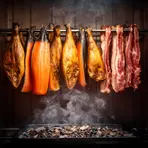
- As in China, the delicate mushrooms are smoked over open fires or in clay pots over fires.
Loading YouTube…
Watch on YouTubeTugs were buzzing up and down the river, paddle wheels flashing, iron muzzle smoking.
- Tugs were buzzing up and down the river, paddle wheels flashing, iron muzzle smoking.
Examples
-
On a fine day, if they don't come on deck, the captain smokes them out.
Academic text (1993) -
The rug it rests on is beginning to smoke and discolor.
Fiction book (1990) -
Then we're going to go back to this nice deep, warm brown and kind of smoke it around.
-
Or we'll smoke you out.
-
I'm going to take just a little bit of run and we are going to smoke out that line ever so slightly.
-
And I'm going to put this up a little bit higher than usual and then kind of smoke that out.
-
I'm first going to smoke this out on the outer corners here.
-
His engine is smoking.
-
After being wrung, stretched, and hung to dry, the leather is smoked to make it waterproof.
Academic text (2002) -
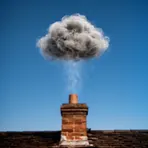
The chimney began to smoke as the fire inside warmed up.
Synonyms
 7
6.4
7
6.4
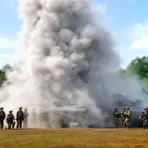
To push out large amounts of smoke or ash suddenly
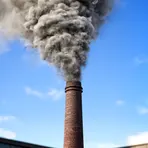 1
4.6
1
4.6
To give off visible smoke or gas from something
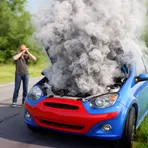
Giving off a lot of smoke, as from a fire or engine

To give off smoke when something is hot or burning
Idioms

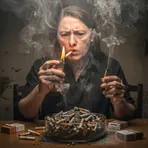




Phrasal Verbs


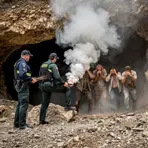
Compounds

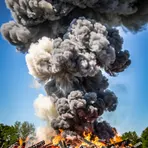





- Specialized
4
5.2
A small object that makes thick smoke to hide people or mark a place

- Literature
3
7.2
A private place where a small group makes secret decisions, often in politics




How Much

Surface Forms
Etymology
The verb smoke also comes from the old idea of making or sending out a 'cloud' from fire, so chimneys, engines, or volcanoes can smoke when they give off that cloud. That's why we say a chimney or bus smokes when it sends out visible fumes.